 Pin it
 My apartment smelled like caramelized onions for three days straight after I first made French onion soup, and honestly, I didn't mind one bit. A friend had mentioned it casually over coffee, describing how her grandmother would spend hours tending a pot, and something about that quiet patience stuck with me. I realized then that this wasn't really a recipe to rush through—it was an excuse to slow down, to let the kitchen fill with that deep, sweet aroma while you actually paid attention to what you were doing. The first time I pulled those bowls out from under the broiler, cheese bubbling and bread golden, I understood why this soup had survived centuries in bistros across France.
I made this for my partner on a freezing February night when nothing else seemed right, and watching them spoon through that crusty bread into the warm broth felt like the most generous thing I could offer without saying much of anything. There's something about melted cheese and beef broth that says comfort louder than words, and I noticed they came back to the bowl three times even after they'd declared themselves full. That's when I knew this recipe was worth keeping close.
Ingredients
- Yellow onions (6 large, thinly sliced): These are your main character—they'll release their natural sugars and turn into something almost jammy and golden under slow heat, so don't skip the slicing step or rush the caramelization.
- Unsalted butter and olive oil (2 tablespoons and 1 tablespoon): The butter brings richness while the oil prevents burning, and this combination is the secret to even, deep caramelization without scorching.
- Beef broth (6 cups): Quality matters here since the broth is the backbone—use the best you can find or make your own if you're feeling ambitious.
- Dry white wine (1/2 cup, optional but recommended): This adds acidity and complexity that rounds out the deep savory notes beautifully.
- Garlic (2 cloves, minced): Just enough to whisper in the background without overpowering the star, added right at the end of caramelization.
- Sugar and salt (1 teaspoon each): The sugar kickstarts the caramelization process and shouldn't taste sweet in the final soup—it's there to do a job and disappear.
- Fresh thyme and bay leaf: These aromatics simmer in the broth and are removed before serving, infusing everything with subtle herbal depth.
- Crusty French bread (4 slices, about 1 inch thick): Sturdy bread that won't dissolve into mush—stale bread actually works better than fresh because it soaks up the broth without falling apart.
- Gruyère cheese (2 cups, grated): The nutty, slightly sweet flavor of Gruyère is essential here; it melts perfectly and creates those gorgeous golden bubbles.
Tired of Takeout? 🥡
Get 10 meals you can make faster than delivery arrives. Seriously.
One email. No spam. Unsubscribe anytime.
Instructions
- Start the base:
- Melt butter with olive oil in your heavy pot over medium heat—listen for a gentle sizzle, not a violent bubble. Add your sliced onions and let them soften for about 15 minutes, stirring now and then, until they've lost their firmness and turned slightly translucent.
- Build the golden magic:
- Sprinkle the sugar and salt over the onions and bump up the heat slightly, stirring more frequently as they begin to deepen in color. This is where patience becomes your best friend—those 30 to 40 minutes of occasional stirring transform pale onions into a caramelized treasure that tastes almost sweet and savory all at once. You'll know you're done when they're a rich golden brown and smell absolutely incredible.
- Add the aromatics:
- Stir in the minced garlic and let it cook for just a minute until fragrant, then pour in the white wine if you're using it. Scrape the bottom of the pot with a wooden spoon to dissolve all those stuck-on brown bits—that's flavor you don't want to waste.
- Build the broth:
- Pour in your beef broth, add the thyme sprigs and bay leaf, then season with pepper. Bring everything to a boil, then turn the heat down and let it simmer gently for 30 minutes while you take a breath.
- Prepare the topping:
- While the soup simmers, preheat your broiler and arrange bread slices on a baking sheet. Toast them under the broiler, watching carefully so they turn golden but don't char, flipping halfway through.
- Assemble and finish:
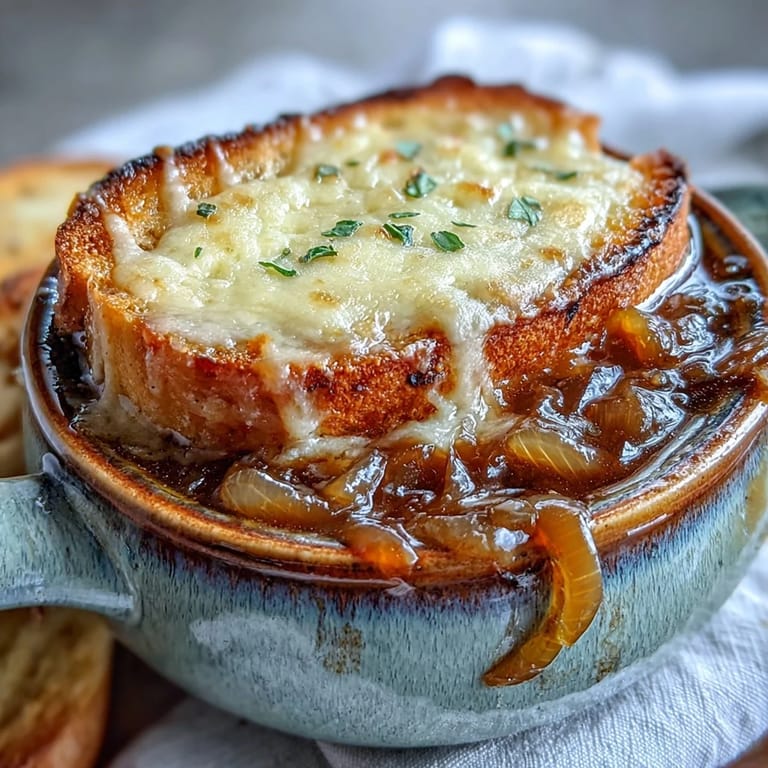
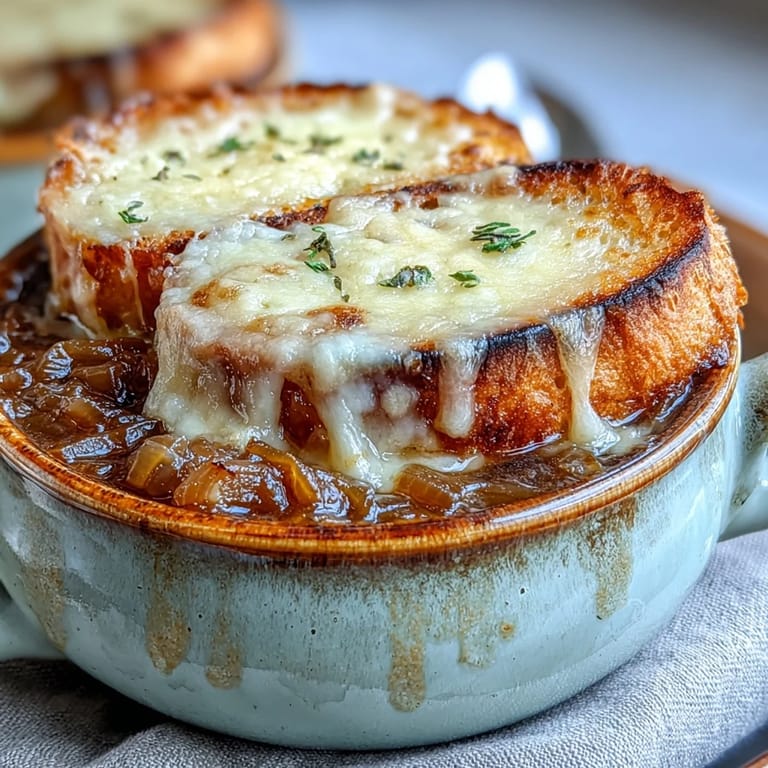
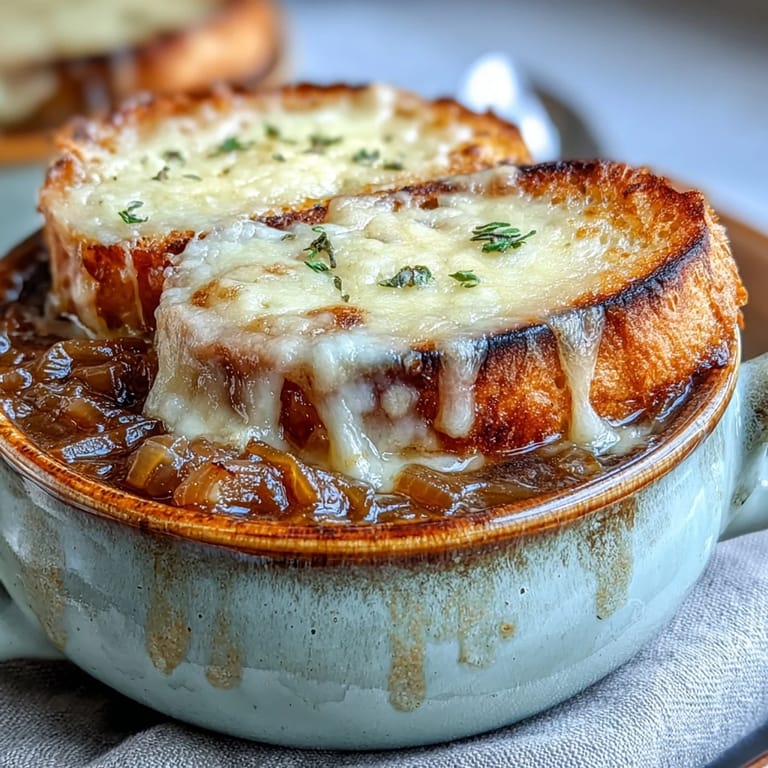
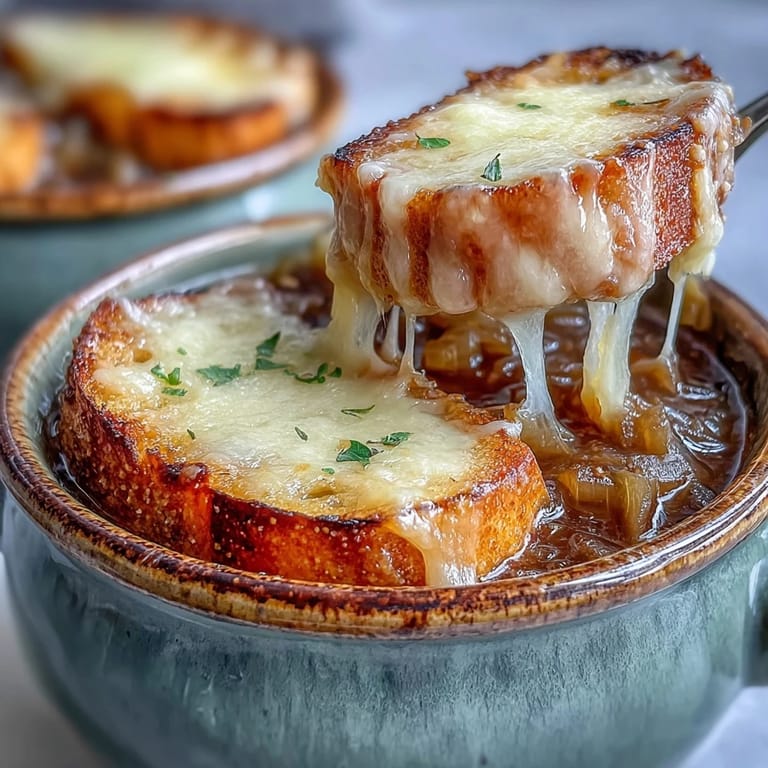
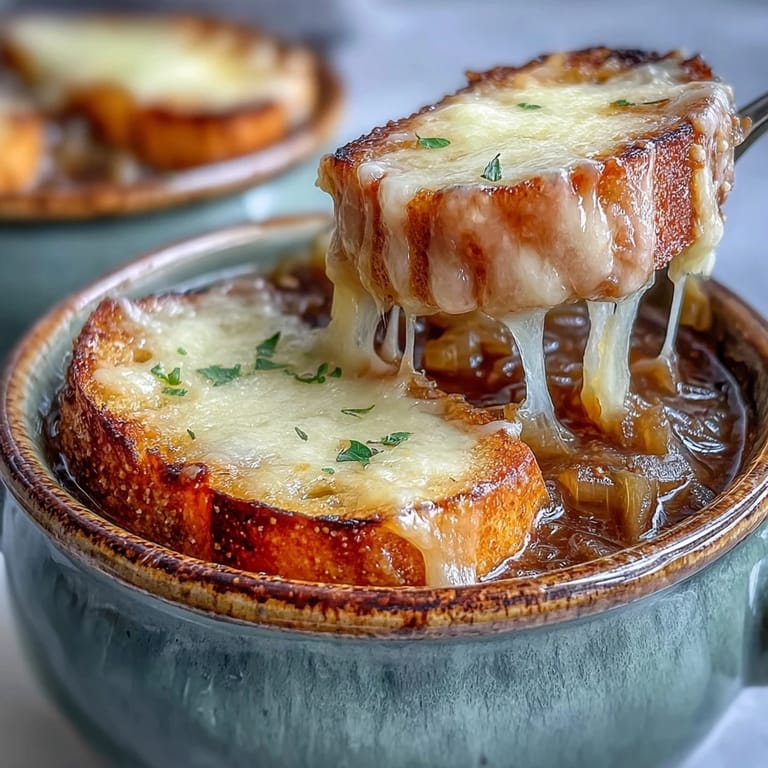
- Ladle the soup into oven-safe bowls, top each with a slice of toasted bread, then heap on a generous handful of grated Gruyère. Pop them under the broiler for 2 to 3 minutes until the cheese melts into bubbling pools of gold—this is the moment that makes the whole recipe worth it.
 Pin it
  Pin it
 I learned the hard way that regular ceramic bowls can crack under the broiler's heat, but more importantly, I learned that good soup teaches you something about yourself. This one taught me that sometimes the most satisfying meals are built on repetition and attention rather than complexity.
The Caramelization: Where All the Magic Happens
Caramelizing onions isn't actually difficult, but it does require presence of mind—you can't wander away and expect perfect results. The onions go through phases: first they soften and turn translucent, then they begin to brown at the edges, and finally they develop that deep amber color with burgundy undertones that means you've arrived. I've learned to trust my nose on this one; when the kitchen fills with that sweet, almost toasted smell, that's your signal to slow down and finish strong. The moment you add that sugar and salt is crucial because it speeds up browning and prevents the onions from steaming instead of caramelizing.
Wine and Umami: Building Layers
That white wine isn't just fancy addition—it's a flavor equalizer that adds brightness and acidity to balance all the richness. When you pour it in and scrape those caramelized bits from the bottom of the pot, you're essentially concentrating all the flavor work you've already done. I skip it sometimes out of laziness and always regret it; the soup tastes flatter, less interesting, like it's missing a conversation it should have been having.
Finishing Touches That Matter
The bread toasting step seems small, but it's critical—you're creating a barrier that keeps the bread from falling apart in the hot broth while also adding texture and a subtle toasted flavor. Some people rub their toasted bread with a cut garlic clove before adding cheese, and while that's not required, it's a move I've adopted because it adds a gentle garlic whisper that feels sophisticated. The cheese itself should be a generous handful, not shy about it.
- If your Gruyère is expensive or hard to find, Emmental or Swiss cheese will do the job beautifully.
- For a vegetarian version, swap beef broth for vegetable broth and you lose nothing in terms of satisfaction.
- Stale bread actually outperforms fresh bread here because it holds its structure better under the weight of soup and melted cheese.
 Pin it
  Pin it
 This soup is the kind that teaches you something about cooking just by making it, and more importantly, it's the kind that brings people to the table hungry and leaves them satisfied. Serve it with that glass of dry white wine if you'd like, and watch what happens.
Questions & Answers
- → How long does it take to properly caramelize the onions?
Caramelizing the onions takes 30-40 minutes over medium heat with frequent stirring. This patient process develops the deep golden color and sweet, complex flavor that makes French onion soup distinctive.
- → Can I make this soup vegetarian?
Yes, simply substitute vegetable broth for the beef broth. The caramelized onions still provide rich, deep flavor that makes for a satisfying vegetarian version of this classic soup.
- → What cheese works best if I can't find Gruyère?
Emmental or Swiss cheese are excellent substitutes for Gruyère. They melt beautifully and provide similar nutty, savory flavors that complement the caramelized onions perfectly.
- → Do I need oven-safe bowls for this soup?
Yes, oven-safe bowls are essential for broiling the cheese topping. The bowls must withstand high heat from the broiler to melt and bubble the Gruyère cheese properly.
- → Can I prepare the soup ahead of time?
Absolutely. The soup base can be made 2-3 days ahead and refrigerated. When ready to serve, reheat the soup, then add the bread and cheese topping before broiling.
- → Why add sugar to the onions?
The sugar helps accelerate caramelization and enhances the natural sweetness of the onions. It aids in developing the deep golden color and rich flavor characteristic of French onion soup.