 Pin it
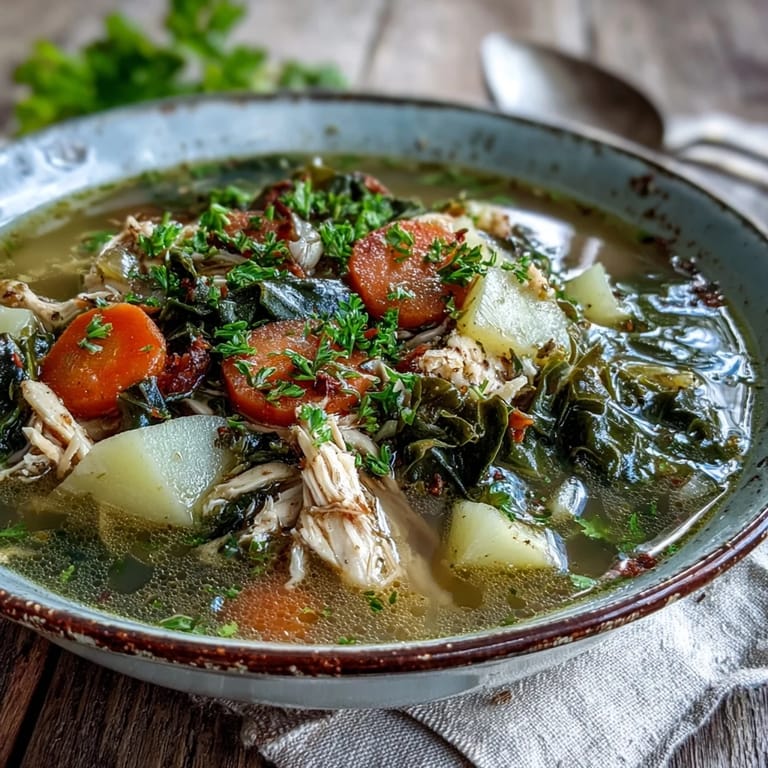
 There's something about the smell of celery and onion hitting hot oil that signals comfort is on the way. My grandmother used to say a good soup teaches you patience, and this one did exactly that for me—not through fussy techniques, but through the simple act of watching chicken soften into shreds and greens transform from tough to tender. What started as a rainy Tuesday experiment became the soup I reach for when I need to feed people and feed myself at the same time.
I made this for my sister after she'd been under the weather, and watching her take that first spoonful—really taste it, not just eat it—reminded me why I cook at all. She went quiet for a second, then asked for seconds before finishing the first bowl. That moment taught me more about seasoning and care than any recipe technique ever could.
Ingredients
- Boneless, skinless chicken breasts (2, about 400 g): Use breasts that are roughly the same thickness so they cook evenly; thinner ones will shred more easily and absorb the broth's flavor.
- Collard greens (1 large bunch, about 300 g): Strip the leaves from the thick center stems—those go straight to the compost—because the stems take forever to soften and nobody wants to chew through them.
- Yukon Gold potatoes (2 medium, peeled and diced): These waxy potatoes hold their shape instead of turning to mush, and they have a subtle sweetness that balances the earthy greens beautifully.
- Carrots (2, peeled and sliced): The natural sugars caramelize slightly during the initial sauté, building the soup's foundational flavor.
- Celery stalks (2, diced): This is your aromatic backbone; don't skip it or use celery salt as a shortcut.
- Onion (1 medium, diced): Dice it smaller than you think you need to—it dissolves into the broth and creates body.
- Garlic cloves (3, minced): Add it after the softer vegetables to prevent it from browning and turning bitter.
- Low-sodium chicken broth (1.5 liters or 6 cups): Use broth you'd actually taste on its own; it's doing half the work here.
- Bay leaf (1): Don't forget to fish this out before serving or you'll be that person.
- Dried thyme (1 teaspoon): Fresh thyme is lovely but dried works perfectly here and doesn't get lost in the broth.
- Smoked paprika (1 teaspoon): This adds a subtle depth that nobody can quite name but everybody notices is missing if you leave it out.
- Black pepper (½ teaspoon): Grind it fresh if you can; pre-ground loses its bite.
- Salt (1 teaspoon, or to taste): Taste as you go because chicken broths vary wildly in their saltiness.
- Olive oil (2 tablespoons): Good quality makes a difference here since it's not being cooked down into obscurity.
- Lemon juice (½ lemon): The acid brightens everything at the end and makes the greens taste like themselves instead of like boiled vegetables.
- Fresh parsley (optional, for garnish): A small handful chopped over the top adds color and a whisper of freshness.
Tired of Takeout? 🥡
Get 10 meals you can make faster than delivery arrives. Seriously.
One email. No spam. Unsubscribe anytime.
Instructions
- Build the base:
- Heat olive oil in your largest pot over medium heat and let it shimmer—you'll smell it changing. Add onion, carrots, and celery, stirring every minute or so for about five to six minutes until the onion turns translucent and the carrots soften just slightly at the edges.
- Wake up the garlic:
- Scatter minced garlic over the vegetables and stir constantly for just one minute—any longer and it starts to brown and taste acrid instead of warm and inviting.
- Build the body:
- Add your chicken breasts whole (they'll shred later), then the diced potatoes, bay leaf, thyme, smoked paprika, salt, and pepper. Pour in all the broth at once and give everything a good stir to distribute the seasonings evenly.
- Let it cook:
- Bring the whole thing to a boil—you'll see the surface ripple and steam rise—then immediately lower the heat to a gentle simmer. Cover it and set a timer for twenty minutes; you want small bubbles breaking the surface occasionally, not an aggressive rolling boil.
- Shred and return:
- Carefully remove the chicken with tongs or a slotted spoon and set it on a cutting board to cool just enough to handle. Using two forks, pull the meat apart into shreds—it should fall apart easily if it's cooked through. Stir the shredded chicken back into the pot.
- Introduce the greens:
- Add your chopped collard greens and simmer uncovered for ten to twelve minutes; they'll gradually soften and lose their raw edge while staying bright green and full of character. Stir occasionally so they wilt evenly.
- Finish strong:
- Squeeze in lemon juice, taste, and adjust salt and pepper to your preference. Some days you'll want more thyme, some days more lemon—let your instincts guide you.
- Serve with intention:
- Ladle into bowls, scatter parsley over the top if you have it, and serve while it's still steaming and the greens haven't started to lose their color.
 Pin it
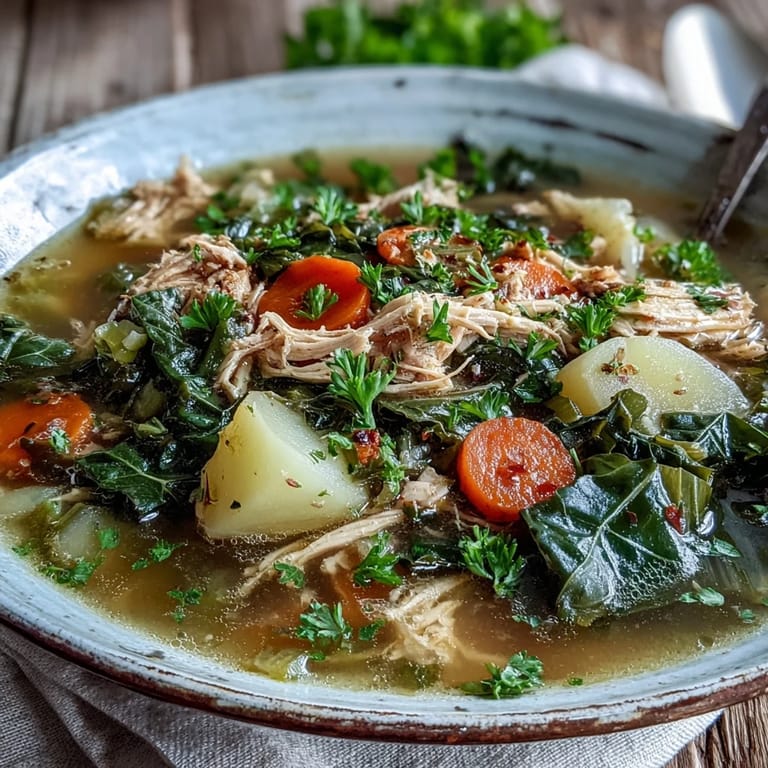
 My partner brought a friend over who claimed to hate greens, and I didn't make a thing of it—I just ladled soup into bowls and let the dish speak. She ate two bowls and asked for the recipe, which felt like winning something I didn't know I'd entered.
Why This Soup Works
There's a rhythm to this soup that makes sense the moment you start cooking it. The aromatic vegetables create a foundation that's forgiving and deep, the chicken adds protein and substance without heaviness, and the collard greens bring an earthiness that surprises people who think greens are only for salads. The broth ties everything together with simple seasoning that lets each ingredient shine instead of masking it.
Making It Your Own
Once you've made this soup once, you'll understand its structure well enough to play with it. I've added a Parmesan rind during the simmer and removed it before serving—it adds a umami richness that deepens the whole pot. I've swapped kale or Swiss chard when collard greens weren't in the market, though the flavor shifts slightly with each green. For a vegetarian version, skip the chicken, use vegetable broth, and add a can of white beans for protein; you'll lose nothing and gain something different.
Serving and Storage
This soup is best eaten the day you make it while the greens still have their bright color and slight snap, but it keeps beautifully for three or four days in the refrigerator. Reheat it gently over low heat so the broth doesn't reduce too much and concentrate the salt. Serve it as is or ladle it over brown rice, or alongside crusty bread for soaking up every drop.
- Store leftovers in glass containers so you can see what you have at a glance.
- Freeze it without the parsley garnish and thaw overnight in the refrigerator before reheating.
- A squeeze of fresh lemon juice when you reheat brings back the brightness that mellows over time.
 Pin it
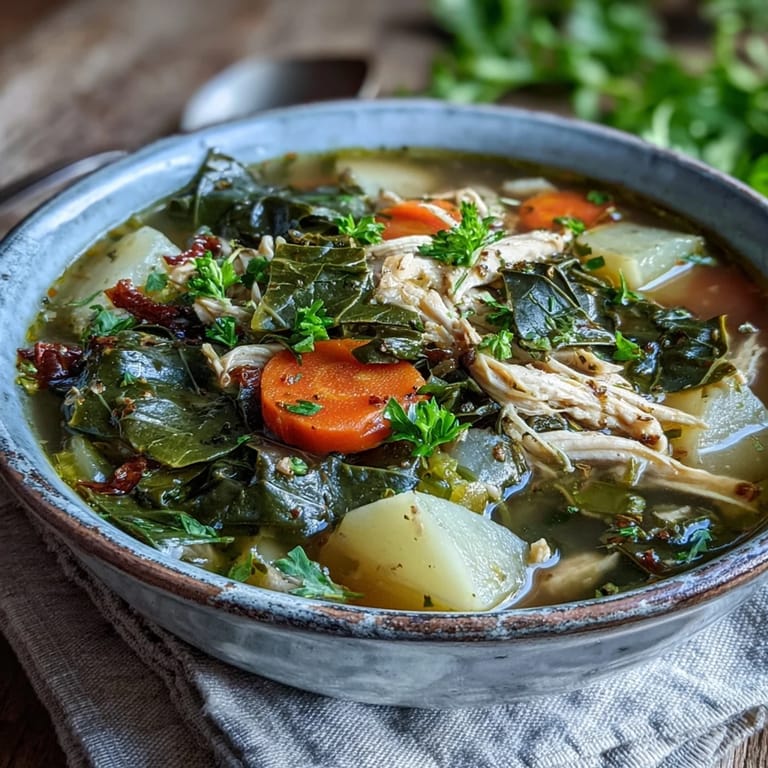
 This soup has taught me that comfort food doesn't require complicated steps or rare ingredients—it requires attention and intention. Make it when someone needs nourishing, make it when you need to feed a group without fuss, make it simply because your kitchen needs to smell like home.
Questions & Answers
- → Can I use other greens instead of collard greens?
Yes, kale or Swiss chard work beautifully as substitutes. Add them during the last 10-12 minutes of cooking as directed in the recipe.
- → How do I store leftovers?
Store cooled soup in an airtight container in the refrigerator for up to 4 days. Reheat gently on the stovetet, adding a splash of broth if needed.
- → Can I make this vegetarian?
Absolutely. Omit the chicken and use vegetable broth instead. Add a can of drained white beans for protein to maintain heartiness.
- → What can I serve with this soup?
Crusty bread or crackers make excellent accompaniments. For a more substantial meal, serve over brown rice or with a simple side salad.
- → Can I freeze this soup?
Yes, freeze in portion-sized containers for up to 3 months. Thaw overnight in the refrigerator before reheating. Note that potatoes may soften slightly after freezing.