 Pin it
 There's something magical about the moment when lemongrass hits hot broth, and that's exactly what pulled me into making this soup on a grey Tuesday afternoon. I was craving the bright, complex heat of tom yum but wanted something more substantial, so I thought, why not tuck Chinese wontons into the mix? The result was so unexpectedly harmonious that I've been chasing that same feeling in a bowl ever since. This soup became my go-to when I needed comfort that also felt adventurous, proof that the best dishes often come from a little culinary improvisation.
I made this for my sister the first time she visited after moving across the country, and watching her face as she took that first spoonful reminded me why cooking for people matters. The broth was crackling with heat and brightness, the wontons released this subtle sesame perfume, and suddenly we were sitting in my kitchen talking until the soup went cold. That's when I realized this dish had become something beyond ingredients and technique, it was a way of saying I'm glad you're here.
Ingredients
- Ground pork: The foundation of your wontons, offering a subtle richness that won't overpower the delicate dumplings, though chicken works beautifully if you prefer something lighter.
- Soy sauce: This seasons the filling with umami depth, a small amount goes a long way so don't oversalt.
- Sesame oil: Just a teaspoon adds an aromatic complexity that elevates the filling from basic to memorable.
- Ginger and garlic: The aromatic foundation that makes your wontons taste alive rather than one-dimensional.
- Spring onion: Finely chopped so it distributes evenly and adds a whisper of freshness to each bite.
- Wonton wrappers: Keep them under a damp cloth while you work or they'll dry out and crack, which I learned the frustrating way.
- Chicken stock: Low-sodium is essential here because fish sauce and soy sauce will add plenty of salt on their own.
- Lemongrass: The heart of tom yum, smash it gently to release oils rather than pulverizing it, and don't skip this step.
- Kaffir lime leaves: These deliver an aromatic citrus note that lime juice alone simply cannot replicate, seek them out if you can.
- Galangal: Similar to ginger but with a sharper, more medicinal edge that defines authentic tom yum, ginger is a reasonable substitute in a pinch.
- Red chilies: Slice them to control the heat distribution, leave seeds in for more fire or remove them for a gentler warmth.
- Mushrooms: Shiitake adds deeper flavor than button mushrooms, but use what you have and slice them thin so they cook quickly.
- Tomatoes: Quarter them so they break down slightly into the broth, adding body and subtle sweetness.
- Fish sauce: Start with three tablespoons but taste as you go, it's pungent and you want harmony not overwhelming funk.
- Lime juice: Fresh squeezed makes all the difference, that final squeeze before serving brightens everything.
- Baby bok choy or spinach: Adds color and nutrition with minimal cooking time, wilting in just a minute.
- Shrimp: Optional but they add protein and a subtle sweetness that rounds out the broth beautifully.
Tired of Takeout? 🥡
Get 10 meals you can make faster than delivery arrives. Seriously.
One email. No spam. Unsubscribe anytime.
Instructions
- Make the wonton filling and assemble:
- Combine your ground pork, soy sauce, sesame oil, ginger, garlic, spring onion, and white pepper in a bowl, stirring everything together until it feels homogeneous and fragrant. Place about a teaspoon of filling in the center of each wrapper, wet the edges with your finger dipped in water, then fold and seal into triangles or those envelope shapes, setting them aside under a damp cloth so they don't dry out.
- Build your aromatic broth base:
- Bring your chicken stock to a gentle simmer in a large pot, then add the smashed lemongrass, torn kaffir lime leaves, galangal slices, and sliced chilies, letting everything steep for about 10 minutes until the broth becomes fragrant and takes on a pale golden hue. This is where the magic happens, those aromatics are infusing the stock with all the brightness you're after.
- Layer in the vegetables:
- Stir in your sliced mushrooms and quartered tomatoes, simmering gently for about 5 minutes until the mushrooms soften slightly and the tomatoes begin to break down. Using a slotted spoon, fish out and discard the larger solids like the lemongrass stalks and galangal slices, which have given all their flavor and are just taking up space.
- Season the broth to perfection:
- Add the fish sauce, lime juice, and sugar, tasting as you go because this is where you balance the heat, tang, and umami into something that feels just right for your palate. Don't be shy about adjusting, a squeeze more lime or a pinch more fish sauce can transform the entire bowl.
- Cook the wontons and shrimp:
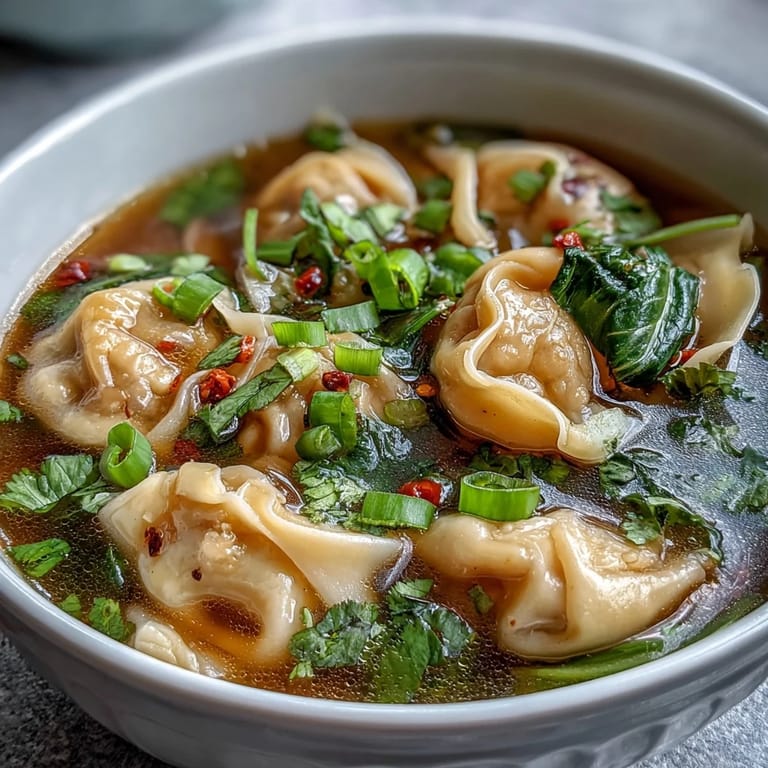
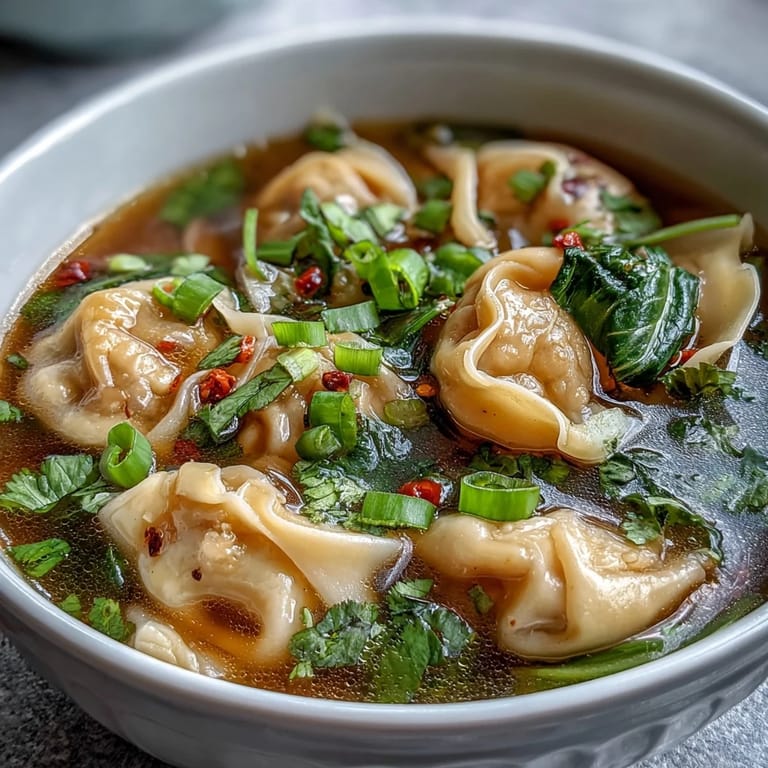
- Gently lower the wontons into the simmering broth, along with the shrimp if you're using them, and let them cook for 4 to 5 minutes until the wontons float to the surface and the shrimp turn pink and opaque. Watch for that float moment, it's the sign that your dumplings are ready.
- Finish with tender greens:
- Add your baby bok choy or spinach in the final minute, just long enough for the leaves to wilt and brighten the bowl. This adds color, nutrition, and a subtle textural contrast to the soft dumplings and tender vegetables.
- Serve with flourish:
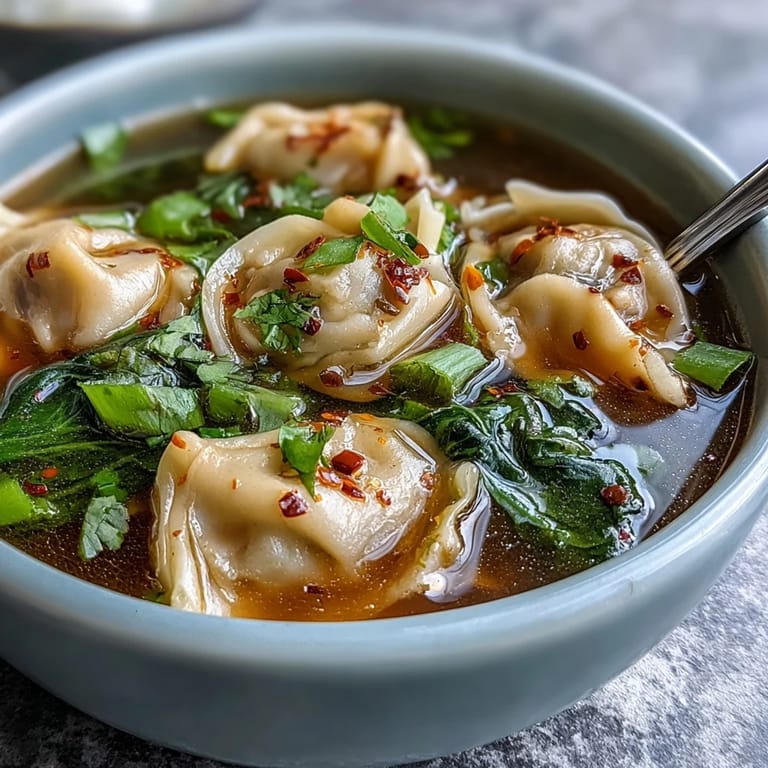
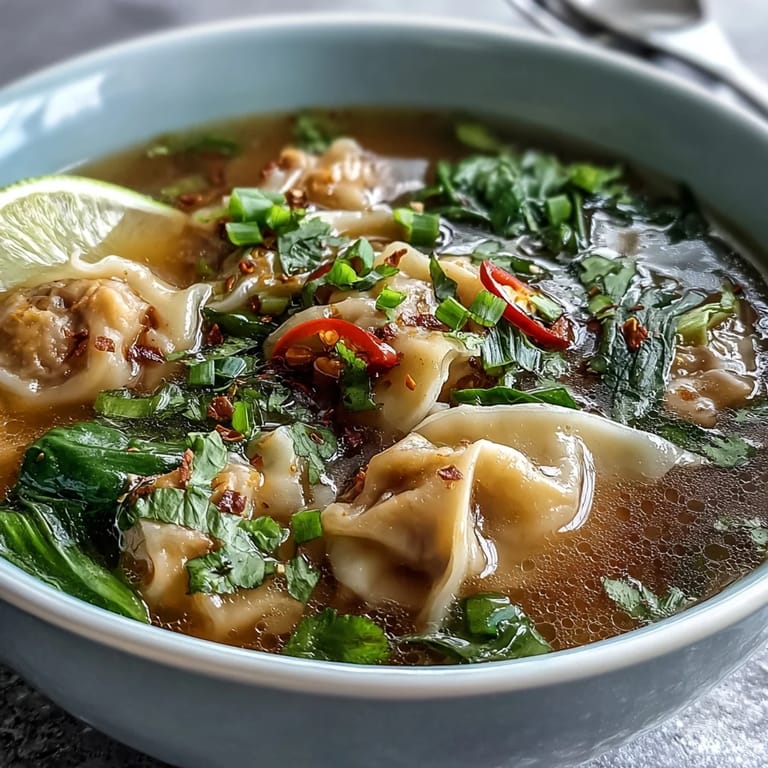
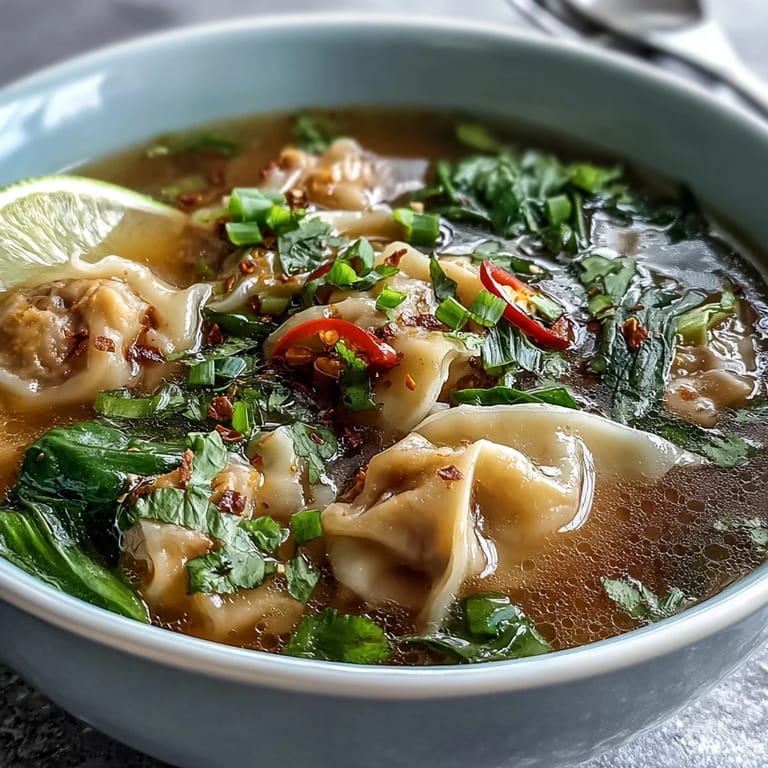
- Ladle the soup into bowls, making sure each gets wontons, broth, and vegetables, then top generously with fresh coriander leaves, sliced spring onions, and a lime wedge on the side. A drizzle of chili oil adds a silky finish if you want to push the heat even further.
 Pin it
  Pin it
 One evening I served this to someone who said they didn't like seafood soups, and by the second spoonful they were asking for seconds and a recipe written down. That's when I understood that this soup transcends categories, it's about those bright layers of flavor working together rather than any single element dominating. Now every time I make it, I think about how food can surprise us when we let it be something unexpected.
The Art of Building Flavor Layers
This soup teaches you something fundamental about Southeast Asian cooking, which is that depth comes from patience, not quantity. The initial infusion of aromatics is where most of the flavor magic happens, and that 10 minutes of gentle simmering is non-negotiable. I've tried rushing it and the broth tastes flat, missing that haunting complexity that makes you want another spoonful.
Making Wontons Like You Mean It
Wonton making is a meditation if you let it be one, the repetitive folding becomes almost soothing once you get the rhythm down. The filling-to-wrapper ratio matters because overstuffing leads to bursts during cooking, something I've done more times than I'd like to admit. Keep your water dish nearby, wet edges seal far better than dry ones, and don't overthink the folding shape, wontons don't care about perfection only that they're sealed and will hold their filling.
Customizing Heat and Sourness
The beauty of this soup is how adaptable it is to your personal preferences for spiciness and tang, there's no one right balance. Some people like their tom yum broth to sing with heat and pucker your mouth, others prefer it warm and balanced. Start conservative with both the chilies and fish sauce, taste frequently, and remember you can always add more but you can't take it out, adjust the lime and chili to match your mood that particular day.
- If you want more heat, leave the chili seeds in or add a squeeze of chili oil when serving.
- For deeper sourness, finish with an extra squeeze of lime just before eating rather than adding it all during cooking.
- Vegetarian wontons and vegetable stock with soy sauce instead of fish sauce make this completely plant-based without sacrificing complexity.
 Pin it
  Pin it
 This soup has become my answer when someone asks what comfort food means to me, because it's warm but also alive with brightness, substantial but never heavy. Make it once and you'll understand why it's worth the effort every single time.
Questions & Answers
- → Can I make the wontons ahead of time?
Yes, you can prepare wontons up to 24 hours in advance. Store them in a single layer on a parchment-lined tray, cover with plastic wrap, and refrigerate. You can also freeze them for up to 3 months and cook directly from frozen, adding 2-3 minutes to cooking time.
- → What can I substitute for galangal?
Fresh ginger works as a substitute, though galangal has a more citrusy, pine-like flavor. Use the same amount of ginger and add an extra kaffir lime leaf to approximate the authentic taste profile.
- → How do I adjust the spice level?
Control heat by adjusting the number of chilies. For mild soup, use 1 chili or remove the seeds. For extra spice, add 3-4 chilies or include a spoonful of Thai chili paste. You can always add chili oil at the table for individual preferences.
- → Can this soup be made vegetarian?
Absolutely. Use crumbled firm tofu or finely chopped mushrooms in the wontons, replace chicken stock with vegetable stock, and substitute fish sauce with soy sauce or tamari. Add extra mushrooms for depth and umami flavor.
- → How do I store and reheat leftovers?
Store broth and wontons separately if possible, as wontons become soft when sitting in liquid. Refrigerate for up to 3 days. Reheat broth gently on the stovetop, then add wontons for the last few minutes. Avoid microwaving as it can make wontons rubbery.
- → What type of mushrooms work best?
Shiitake mushrooms provide the most authentic flavor and meaty texture. Button or cremini mushrooms are good alternatives. Oyster mushrooms also work beautifully and add a delicate texture to the broth.