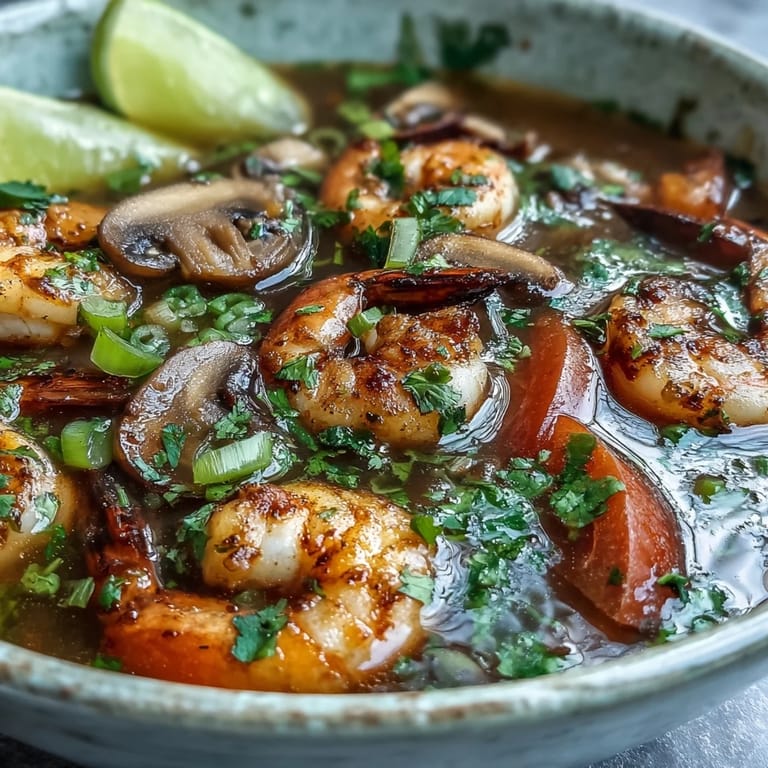
 Pin it
 My first bowl of tom yum arrived at a crowded Bangkok street stall on an ordinary Tuesday, and I watched the vendor work with the kind of focused speed that comes from making the same soup ten thousand times. The steam rose up carrying lemongrass and lime in a way that felt almost shocking to my senses. Years later, when I finally attempted it at home, I realized the magic wasn't in any single ingredient but in respecting the dance between them, letting each one have its moment before the next arrived. That's when this soup stopped being just a recipe and became something I craved on tired evenings.
I made this soup for my neighbor who was going through a rough stretch, and she texted me an hour later asking for the recipe because apparently it was the first meal she'd actually finished in days. That's when I stopped seeing tom yum as just Thai cuisine and started understanding it as medicine that happens to taste incredible. The sharpness of the lime seems to cut through heaviness, both in the bowl and somehow beyond it.
Ingredients
- Chicken or vegetable stock (4 cups): This is your foundation, so use something you'd actually drink on its own rather than the saltiest thing in your cabinet.
- Lemongrass (2 stalks, trimmed and smashed): Smashing it releases the oils that make this soup unmistakably tom yum; if you can't find it, the soup becomes something else entirely.
- Kaffir lime leaves (4, torn): They add a floral brightness that lime juice alone cannot deliver, so don't skip them if you can find them.
- Galangal (3 slices) or ginger: Galangal has a sharper, more mineral quality than ginger, but ginger works in a pinch and the soup will still be delicious.
- Thai birds eye chiles (2, sliced): These are genuinely spicy, so taste as you go and add more only if you enjoy the heat.
- Mushrooms (200 g, sliced): They absorb the broth and add umami without overwhelming the delicate herbal flavors.
- Tomatoes (2 medium, wedged): Use ones that are actually ripe and flavorful, not pale winter ones.
- Onion (1 small, sliced) and garlic (3 cloves, smashed): These build the aromatic base that everything else floats on.
- Shrimp (300 g, peeled and deveined) or tofu: Shrimp cooks in minutes and stays tender if you don't oversimplify, while tofu absorbs the broth beautifully.
- Fish sauce (3 tbsp): It smells funky in the bottle but becomes the invisible backbone that makes people ask what your secret is.
- Fresh lime juice (2 tbsp): Use fresh limes, not bottled, because the brightness matters.
- Sugar (1 tsp): Just enough to round out the sharp edges without making this sweet.
- Chili paste or nam prik pao (1 tsp, optional): Adds depth if you want it, but the fresh chiles give you plenty of heat already.
- Fresh cilantro, green onions, and lime wedges: These aren't just garnish; they're the final say in your bowl's flavor.
Tired of Takeout? 🥡
Get 10 meals you can make faster than delivery arrives. Seriously.
One email. No spam. Unsubscribe anytime.
Instructions
- Build your aromatic foundation:
- Bring your stock to a gentle boil, then add the lemongrass, kaffir lime leaves, galangal, chiles, garlic, and onion all at once. Let this simmer for exactly 10 minutes so the flavors meld and perfume the broth without becoming muddy. You'll know it's ready when your kitchen smells like a Thai market.
- Welcome the vegetables:
- Add your mushrooms and tomato wedges, letting them cook for about 5 minutes until the mushrooms turn tender and the tomato starts to soften into the broth. Don't walk away; you want to see this moment when everything begins to marry together.
- Add your protein with precision:
- Slide in the shrimp (or tofu) and simmer for just 2 to 3 minutes, watching until the shrimp turns pink throughout. Overcook them by even a minute and they toughen; undercook them and you've got a different problem entirely.
- Season with intention:
- Stir in the fish sauce, lime juice, sugar, and chili paste if you're using it, then taste immediately. This is your moment to adjust—if it needs more sourness, add lime; more heat, add chiles; more umami, a touch more fish sauce. Balance is everything here.
- Finish and serve:
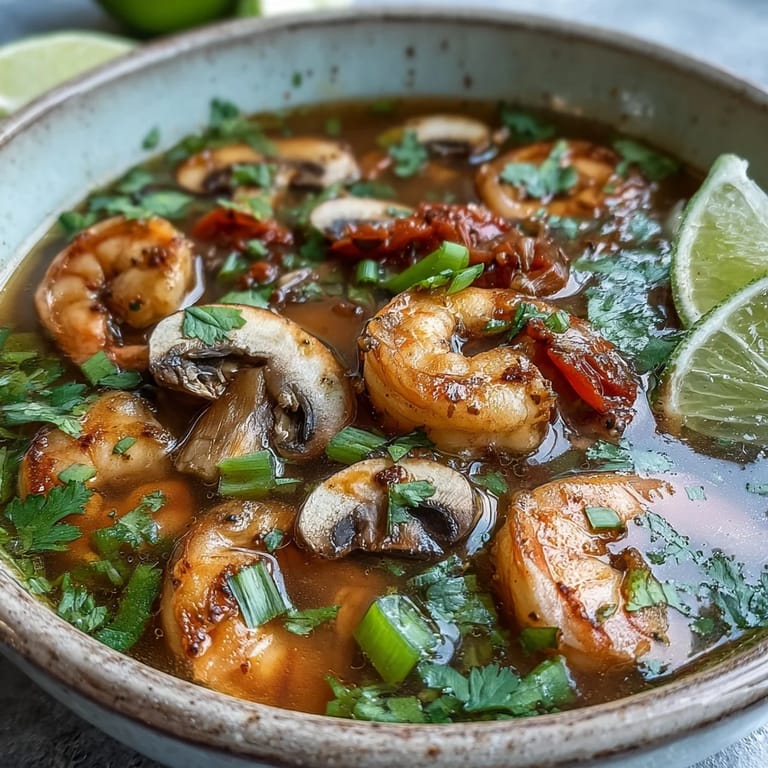
- Remove from heat and ladle into bowls, then top each one with a generous handful of fresh cilantro, sliced green onions, and a lime wedge nestled on the rim. Serve immediately while the steam is still rising and the flavors are at their brightest.
 Pin it
 There's a moment near the end, right after you've tasted and adjusted, where you realize you've created something that tastes like you've been cooking Thai food for years when really you've just paid attention. That's the real gift of tom yum.
On Sourness and Heat
This soup is personal in a way most recipes aren't because everyone's tolerance for sour and spicy lives in different places. I've served this to people who squeezed an entire lime wedge into their bowl and others who diluted theirs with extra broth, and both left happy. Start conservative with the chiles and lime juice, then let each person adjust their own bowl at the table; that way nobody's disappointed and everyone feels like they own their version.
Variations That Work
I've made this soup with whatever vegetables were closest to expiration and it never failed me—add baby corn for a subtle sweetness, straw mushrooms for a different texture, or even a handful of spinach at the very end for color and nutrients. The soup is forgiving as long as you keep the core aromatics (lemongrass, lime, chiles) intact. One winter I added a splash of coconut milk when my tomatoes were mealy, and it became something almost creamy, which some guests preferred.
- Straw mushrooms or baby corn add texture without competing for attention.
- A splash of coconut milk transforms the soup into something richer and more forgiving.
- Vegetable variations matter less than respecting the fundamental balance of flavors.
Making It Your Own
Thai cooking is about understanding the philosophy of balance rather than following rules, so once you've made this once, you'll feel permission to rearrange it. If you find yourself gravitating toward more lime, trust that instinct; if you like your broth thicker, simmer it longer before adding delicate ingredients. The soup teaches you about yourself as much as it teaches you about Thai flavors.
 Pin it
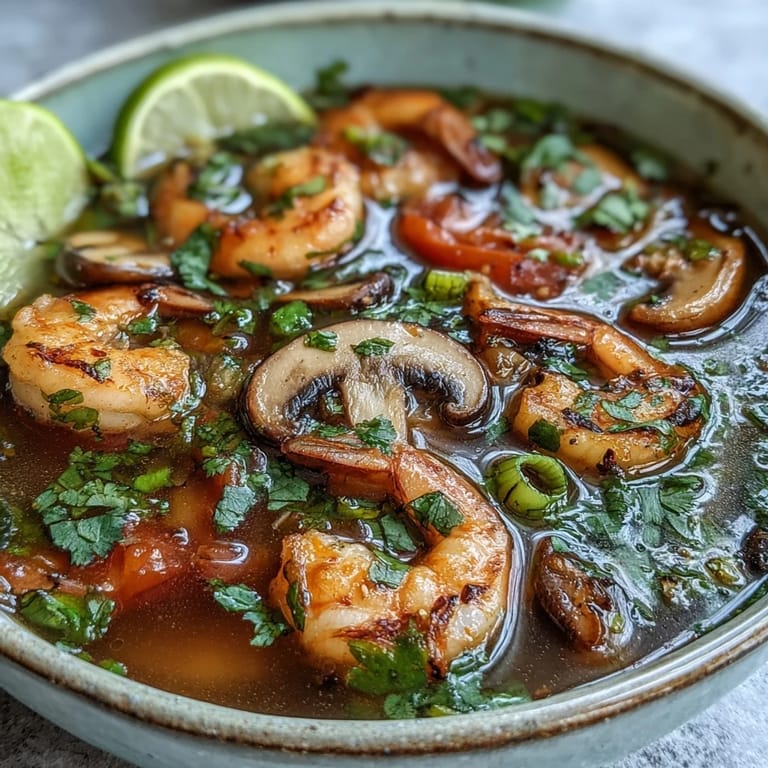
 This soup has become my answer to the question of what to cook when I want to feel capable and make someone else feel cared for simultaneously. Serve it with jasmine rice and something cold to drink, then watch how quickly the bowl empties.
Questions & Answers
- → Can I make Tom Yum Soup vegetarian?
Yes, substitute vegetable stock for chicken stock, use tofu instead of shrimp, and replace fish sauce with soy sauce for a fully vegetarian version.
- → What can I use if I can't find galangal?
Fresh ginger works as an excellent substitute for galangal, though it has a slightly different flavor profile. Use the same amount as called for in the ingredients.
- → How spicy is Tom Yum Soup?
The heat level is adjustable. Start with fewer Thai chiles and add more to taste. You can also reduce or omit the chili paste for a milder version.
- → Can I prepare Tom Yum Soup ahead of time?
The broth can be prepared in advance and refrigerated. Add the shrimp, lime juice, and fresh herbs just before serving to maintain optimal texture and brightness.
- → What other proteins work well in Tom Yum?
Chicken, white fish, squid, or mixed seafood all work beautifully. Adjust cooking times based on the protein chosen to avoid overcooking.
- → Should I remove the lemongrass and lime leaves before serving?
While edible, these aromatics are typically left in for presentation but not eaten. You can strain them out or simply advise diners to set them aside.