 Pin it
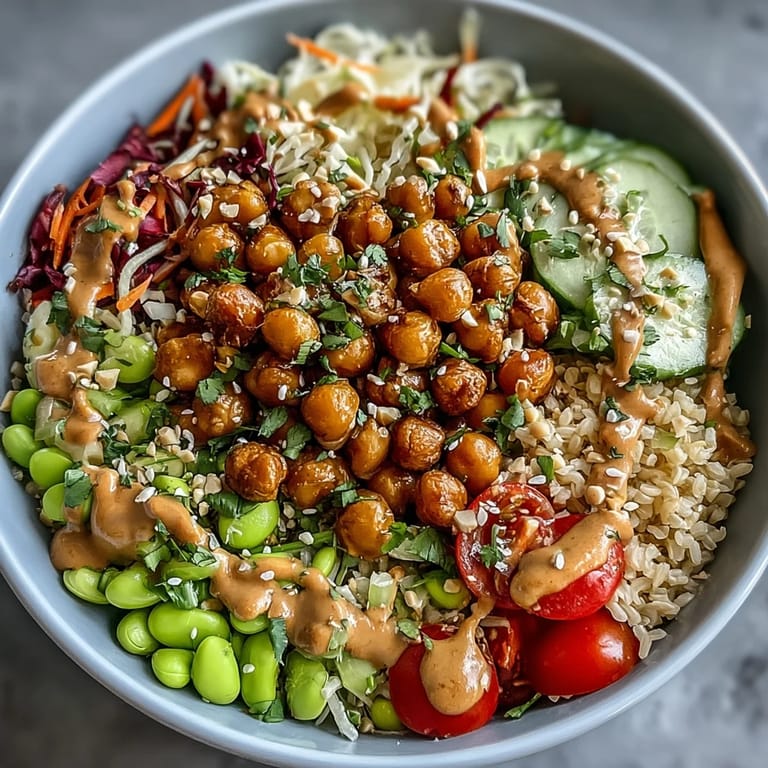
 Last Tuesday, I was scrolling through my phone during lunch when a coworker mentioned she'd been eating the same sad desk salad for weeks. That afternoon, I threw together a peanut chickpea bowl at home just to see what the fuss was about, and suddenly I understood why people get excited about lunch. The roasted chickpeas hit that sweet spot between crunchy and tender, the peanut sauce smelled like a Thai takeout place had set up shop in my kitchen, and somehow all these simple vegetables felt like they belonged together.
My partner came home to find me standing at the counter arranging vegetables like they were going in a magazine photoshoot, which made them laugh until I insisted that the color contrast actually matters because it makes you want to eat it. We ended up making four bowls together that night, and they took one to work the next day and reported back that someone had actually asked for the recipe, which felt like a small victory.
Ingredients
- Chickpeas (2 cans, drained and rinsed): Canned chickpeas are your shortcut to protein without the overnight soaking drama, and rinsing them removes that gluey starch that nobody actually wants.
- Olive oil (1 tbsp): Just enough to coat them so they'll crisp up in the oven, not so much that they turn into an oil slick.
- Smoked paprika, cumin, garlic powder, salt, and pepper: This combination tastes warm and slightly smoky, which somehow makes roasted chickpeas feel more sophisticated than their simple nature.
- Cooked brown rice or quinoa (2 cups): The grain is your foundation, and honestly either one works, though quinoa has a bit more protein if that matters to you.
- Red cabbage, carrots, cucumber, cherry tomatoes, edamame, and cilantro: Raw vegetables give you that satisfying crunch and brightness that balances the richness of the peanut sauce.
- Creamy peanut butter (1/3 cup): The non-natural kind actually works better here because it mixes more smoothly, though natural peanut butter works if you stir the oil in first.
- Soy sauce (2 tbsp, or tamari for gluten-free): This is what gives the sauce depth and keeps it from tasting one-dimensionally nutty.
- Maple syrup or honey (1 tbsp): A small amount of sweetness rounds out the spicy and savory notes without making it taste like dessert.
- Rice vinegar, sriracha, minced garlic, and warm water: These ingredients in combination create a sauce that's balanced and pourable rather than thick and heavy.
- Roasted peanuts and sesame seeds for topping: The final crunch and nuttiness that makes people actually notice they're eating something special.
Tired of Takeout? 🥡
Get 10 meals you can make faster than delivery arrives. Seriously.
One email. No spam. Unsubscribe anytime.
Instructions
- Heat your oven and prep your pan:
- Get the oven to 425°F and line your baking sheet with parchment paper so cleanup later won't feel like a punishment. Cold oven sheets stick to things and make you frustrated, so don't skip this step.
- Season and roast the chickpeas:
- Toss your drained chickpeas with olive oil and all those spices in a bowl until they're evenly coated, then spread them on the baking sheet and get them in the oven for about 20 to 25 minutes. Shake the pan halfway through so they brown evenly instead of getting stuck on one side and burnt on the other.
- Make the peanut sauce while you wait:
- Whisk together peanut butter, soy sauce, maple syrup, rice vinegar, sriracha if you want it spicy, and minced garlic, then slowly add warm water while whisking until you get something pourable that still coats a spoon. This is easier than it sounds, and the warm water makes the peanut butter actually cooperate with you.
- Cook your grains if needed:
- If you're using fresh rice or quinoa, get that going now so it's ready when everything else is. If you already have some cooked, just set it aside.
- Arrange all your vegetables:
- Chop and slice everything and put it in little piles or bowls so assembly feels easy instead of like you're frantically cutting things while your chickpeas cool down.
- Build your bowls:
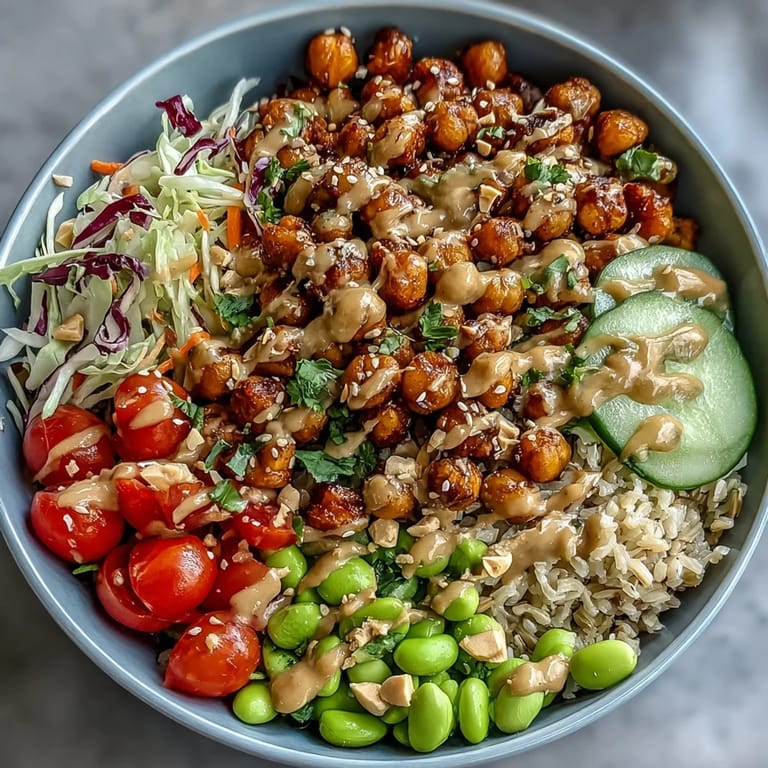
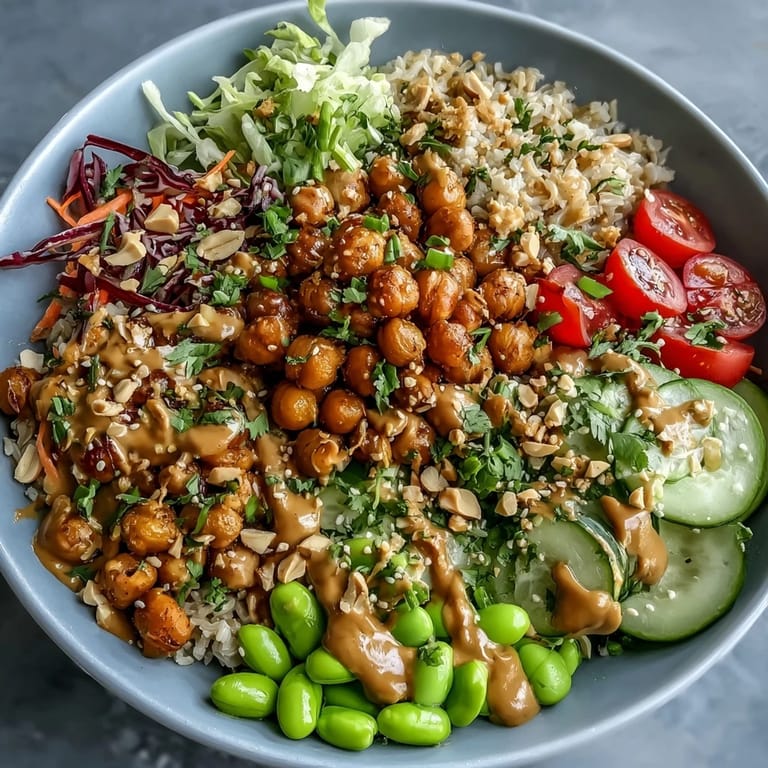
- Start with a base of rice or quinoa, then arrange the roasted chickpeas and all those fresh vegetables on top like you're building something that looks good. It might seem silly to care about presentation in your own kitchen, but it genuinely makes the food taste better to your brain.
- Finish and serve:
- Drizzle everything generously with the peanut sauce, sprinkle the chopped peanuts and sesame seeds on top, and serve with lime wedges so people can add brightness if they want. A squeeze of fresh lime right before eating makes the whole thing brighter.
 Pin it
 There's something about handing someone a bowl of food where every element was chosen with actual thought that changes how they experience eating it. My friend Sarah said it was the first lunch she'd actually looked forward to in months, and that felt like the real success here.
Why This Bowl Became My Go-To
The first time I made this, I expected it to be one of those recipes that looks beautiful but tastes like you're eating for Instagram. Instead, it actually tastes how it looks, which is rarer than you'd think. The combination of something warm and roasted with something cool and crisp, plus that creamy peanut sauce that ties everything together, somehow feels complete without any animal products or weird processed stuff. I've made it probably fifteen times now, and I haven't gotten bored yet, which for me is saying something.
The Sauce Is Everything
Honestly, this whole bowl could be just plain roasted vegetables and rice, but the peanut sauce is what makes you actually excited to eat it. I learned this the hard way when I tried to make the sauce with natural peanut butter that was mostly just peanuts and oil, and it separated immediately and looked sad. The creamy stuff mixes way more smoothly, and the sauce gets silky instead of gritty. Start with less water than you think you need because you can always add more, but you can't take it back out.
Customization Without Overthinking
The beautiful part about this bowl is that it works with whatever vegetables you have on hand, which means you don't need to make a special trip to the store if you're missing one thing. Swap the brown rice for cauliflower rice if you're watching carbs, throw in some greens if you want more volume, or skip the sriracha if spicy food makes your face do the thing. The structure stays solid no matter what you swap around.
- If you make this ahead of time, keep the sauce separate until right before eating so everything stays crisp.
- The chickpeas actually taste better the next day, so this is one of those recipes that improves in the fridge instead of getting sad.
- Double the sauce recipe even if you're only making four bowls, because people will ask for extra to drizzle on top.
 Pin it
 This bowl is one of those meals that made me realize vegetarian cooking doesn't have to mean deprivation, and that healthy food doesn't have to taste like you're being punished. Make it for yourself on a regular Tuesday, or make it when someone comes over and you want them to see that you actually know how to cook.
Questions & Answers
- → Can I make the peanut sauce ahead of time?
Yes, the peanut sauce keeps well in the refrigerator for up to one week. Store it in an airtight container and add warm water to thin it before serving, as it will thicken when chilled.
- → What vegetables work best in this bowl?
Red cabbage, carrots, cucumber, and cherry tomatoes provide excellent crunch and color. You can also add thinly sliced bell peppers, shredded kale, baby spinach, or steamed broccoli depending on what's in season.
- → How do I get the chickpeas really crispy?
Make sure to drain and rinse the chickpeas thoroughly, then pat them completely dry with a clean towel before tossing with oil and spices. Spread them in a single layer on the baking sheet without overcrowding, and roast at 425°F until golden brown.
- → Is this bowl gluten-free?
The bowl is naturally gluten-free if you use tamari instead of soy sauce in the peanut dressing and ensure your grains are certified gluten-free. Always check labels on packaged ingredients like roasted peanuts and seasonings.
- → Can I use a different nut butter?
Almond butter or cashew butter work well as substitutes, though the flavor profile will shift slightly. Tahini can also be used for a sesame-forward sauce, though you may need to adjust the sweetener and liquid ratios to achieve the right consistency.
- → How long do leftovers last?
Store components separately in airtight containers—the roasted chickpeas, vegetables, grains, and sauce will keep for 4-5 days. For best texture, assemble bowls just before serving and keep the sauce on the side until ready to eat.