 Pin it
 Bangkok's humidity hits different when you're standing in a cramped night market stall, steam rising from a vendor's enormous pot of tom yum. I was there on a sweltering evening, watching her move with practiced ease—tossing aromatics into broth like she was conducting an orchestra. She caught me staring and wordlessly handed me a spoon to taste. That first sip was electric: the heat, the brightness of lime cutting through richness, the way each herb seemed to sing on my tongue. I spent the next hour asking questions until she finally laughed and said I should just make it at home.
Years later, I made this for a friend who'd just moved to my city and was homesick for Thai food. Watching her face when she tasted it—that moment of recognition mixed with surprise—reminded me why I keep making this soup. She asked for the recipe immediately, and I realized it had become less about recreating that Bangkok night and more about creating those moments for people I care about.
Ingredients
- Chicken breast or thighs: Thighs stay more tender during cooking, but breasts work fine if you slice them thin and don't overcook—I learned this the hard way with rubbery results.
- Chicken stock: Good quality matters here because it's your foundation; homemade is ideal, but a reliable store-bought works when you're in a hurry.
- Lemongrass: The woody outer layers protect the tender inner core where the real flavor lives—remove them and smash what's left to release those citrusy oils.
- Kaffir lime leaves: These are non-negotiable if you can find them; they add a complexity that regular lime juice alone can't match, so don't skip them.
- Galangal: It's sharper and more pine-like than ginger, but ginger works if you're stuck—use slightly less since it's more assertive.
- Thai birds eye chiles: Small but mighty; these pack genuine heat without becoming overwhelming if you smash rather than slice them.
- Mushrooms: Oyster mushrooms soak up broth like tiny sponges, but button mushrooms are perfectly acceptable and easier to find.
- Nam prik pao: This roasted chili paste adds umami depth that fresh chiles alone can't provide—it's the secret weapon that makes this taste authentic.
- Fish sauce: Yes, it smells questionable in the bottle, but trust it; it's what makes Thai soup taste like Thai soup, not just hot broth.
- Lime juice: Always use fresh; bottled tastes flat and thin by comparison.
Tired of Takeout? 🥡
Get 10 meals you can make faster than delivery arrives. Seriously.
One email. No spam. Unsubscribe anytime.
Instructions
- Build Your Aromatic Base:
- Pour your stock into a large saucepan and let it come to a gentle boil. Add the smashed lemongrass, torn kaffir lime leaves, galangal slices, and chiles all at once, then watch the broth transform as it simmers for five minutes—the kitchen will smell almost intoxicating.
- Cook the Chicken Through:
- Slide in your sliced chicken and let it simmer for three to four minutes, stirring occasionally until the pieces turn opaque and cooked through. Skim away any foam that rises to the surface so your broth stays clear and clean.
- Soften the Vegetables:
- Add mushrooms, tomato wedges, and onion slices, then let everything simmer together for another three to four minutes until the vegetables are just tender. Don't let them go mushy—you want them to hold their shape and texture.
- Season with Intention:
- Stir in the nam prik pao, fish sauce, sugar, and salt, then simmer for two more minutes so all those flavors can meld together. This is where you start tasting and adjusting—does it need more heat, more salt, more depth?
- Finish with Brightness:
- Remove from heat and squeeze in your fresh lime juice, stirring gently. Taste again and keep adjusting until it feels perfectly balanced to you—that sour-spicy-fragrant magic.
- Serve with Ceremony:
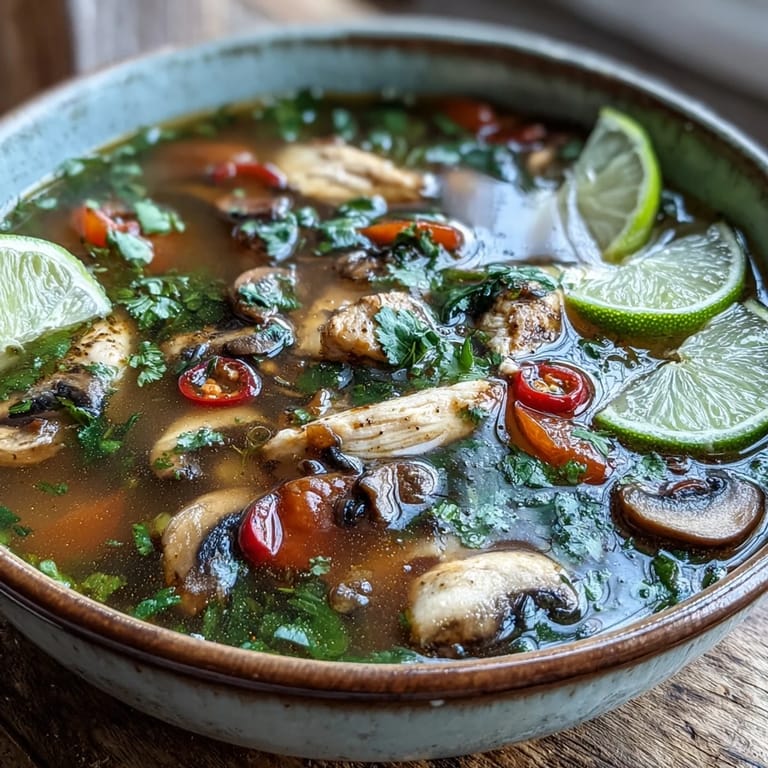
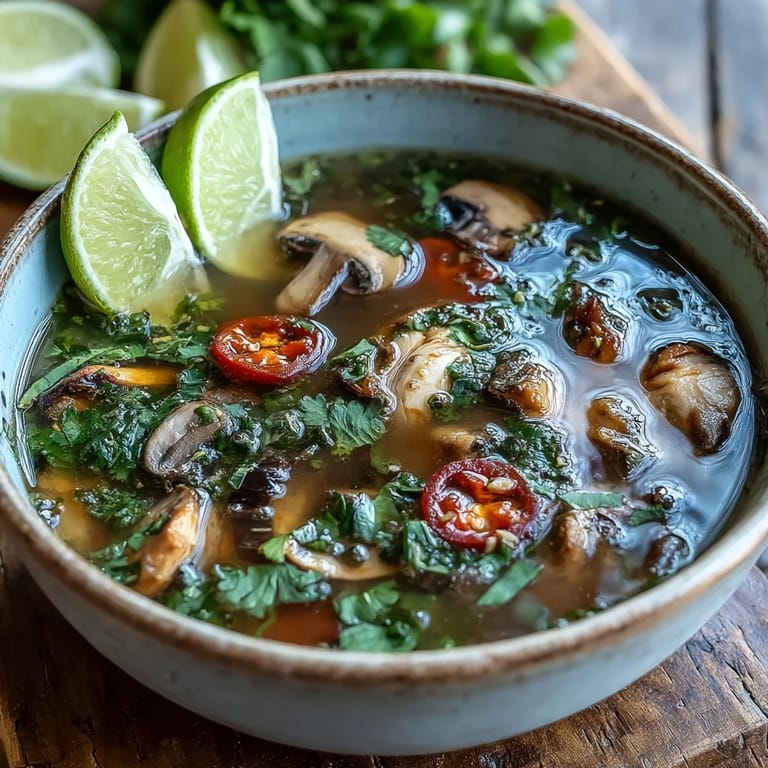
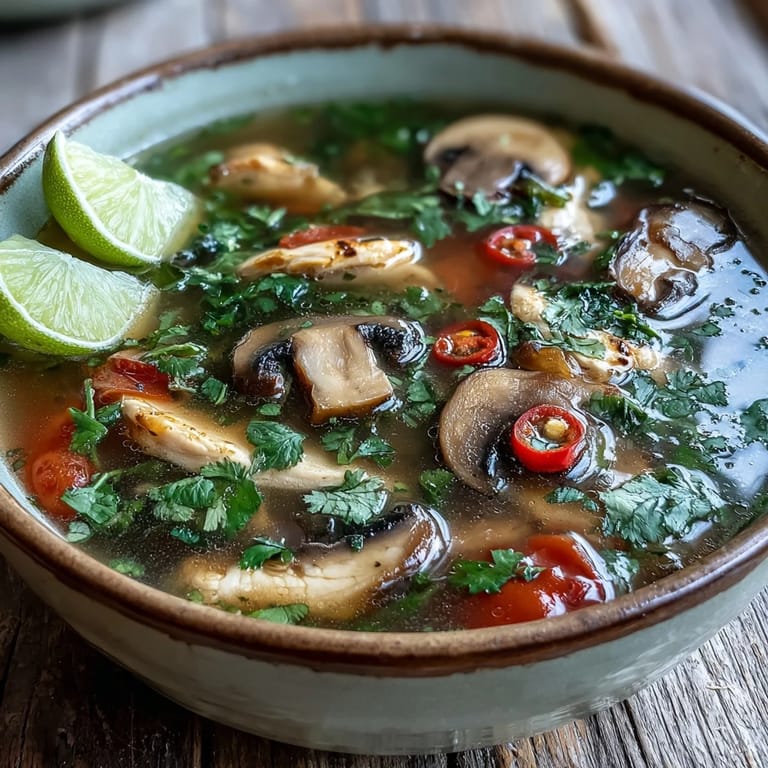
- Ladle into bowls and top with a handful of fresh cilantro and sliced chiles if you like extra kick. Set lime wedges on the side so people can adjust the sourness to their own taste.
 Pin it
 There's a specific moment about halfway through cooking tom yum when you realize you're not making soup—you're building a complete sensory experience. The steam carries that distinctive Thai fragrance, and suddenly you're transported somewhere warmer, somewhere where meals are meant to be loud and bold and unapologetic.
The Art of Balance
Thai cooking is really about balancing four elements: spicy, sour, salty, and sweet. Tom yum walks that tightrope perfectly, and understanding this ratio changes how you cook everything Thai. I used to just follow the recipe exactly, but once I started tasting and adjusting each component, everything clicked. The fish sauce provides the salty-umami foundation, lime juice brings the sour brightness, chiles deliver heat, and a tiny bit of sugar rounds out the sharp edges. When you taste it and something feels off, you know exactly where to reach.
Protein and Vegetable Flexibility
This soup's real superpower is how adaptable it is without losing its identity. Shrimp cooks even faster than chicken—just add it in the last minute or two so it doesn't toughen up. Tofu works beautifully if you want vegetarian versions, though you'll need extra umami from the nam prik pao or a splash of soy sauce. I've thrown in baby corn, snap peas, bell peppers, and even leftover cooked vegetables. The only rule is respecting cooking times so nothing becomes mushy.
Storage and Make-Ahead Strategy
Tom yum tastes even better the next day because the flavors deepen and meld overnight, though the aroma somehow intensifies too. Store it in an airtight container in the fridge for up to three days, and reheat gently without boiling so you don't damage the fresh lime brightness. You can also make the broth base up to two days ahead and add the chicken and vegetables fresh each time you need it—this works perfectly for meal prep if you're that organized.
- Freeze the aromatic-infused broth base separately from the protein and vegetables for maximum flexibility.
- Always taste and re-season after reheating, because flavors can flatten slightly in storage.
- Keep lime wedges and fresh cilantro on the side so people can customize their own bowls.
 Pin it
 Every time I make tom yum, that Bangkok night market comes back to me—not as nostalgia, but as gratitude. This soup taught me that good cooking isn't about following rules perfectly; it's about understanding what each ingredient contributes and trusting your palate to tell you when something's right.
Questions & Answers
- → Can I substitute regular ginger for galangal?
Yes, fresh ginger works as a substitute for galangal, though galangal has a more citrusy, pine-like flavor. Use the same amount and expect a slightly different but still delicious taste profile.
- → How do I control the spiciness level?
Adjust the number of Thai bird's eye chiles to your preference. Start with 1-2 for mild heat, or omit them entirely and add sliced chiles as garnish so diners can control their own spice level.
- → What is nam prik pao and can I substitute it?
Nam prik pao is Thai roasted chili paste that adds depth, sweetness, and smokiness. If unavailable, you can substitute with a mix of sriracha and a pinch of sugar, though the flavor will differ slightly.
- → Can I make this soup ahead of time?
The broth can be prepared in advance and refrigerated for up to 2 days. Add fresh chicken, vegetables, and lime juice when reheating to maintain the best texture and bright flavors.
- → Why add lime juice at the end instead of during cooking?
Adding lime juice after removing from heat preserves its bright, fresh citrus flavor. Cooking lime juice can make it taste bitter and dull, so always add it last for the best tangy punch.
- → What's the difference between Tom Yum Gai and Tom Yum Goong?
Tom Yum Gai uses chicken as the protein, while Tom Yum Goong features shrimp. Both share the same aromatic, spicy-sour broth base with lemongrass, galangal, and kaffir lime leaves.