 Pin it
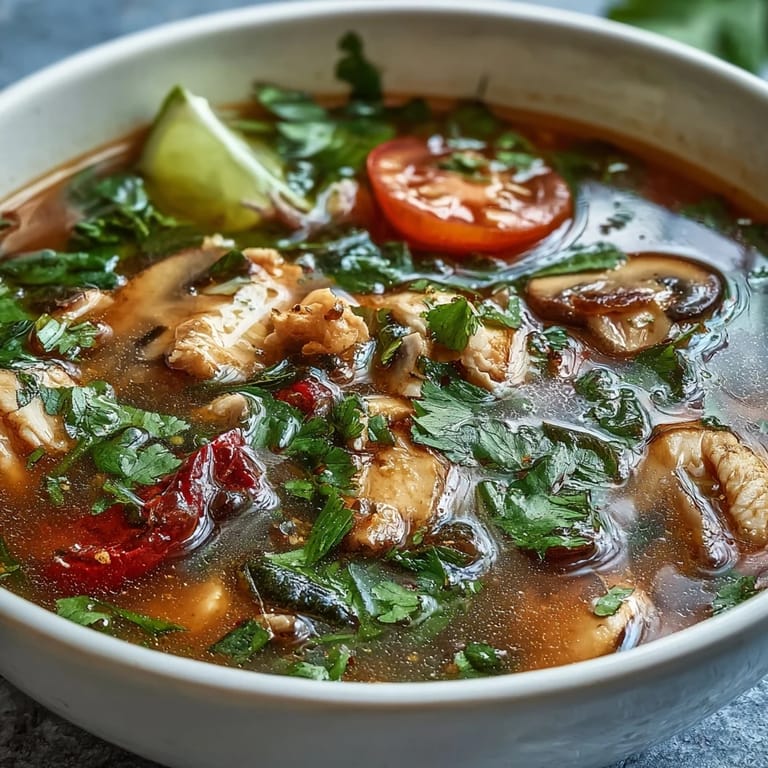
 My first real Tom Yum was served in a tiny Bangkok street stall where the owner insisted I watch her work, crushing lemongrass against the pot's rim with practiced urgency. She moved with such confidence, never measuring anything, just tasting and adjusting until the balance of heat, sour, and salt made her nod with satisfaction. That moment taught me that Tom Yum isn't really about following steps precisely—it's about understanding that interplay of flavors and trusting your palate. Years later, I recreated that soup in my own kitchen, and it became the dish I make whenever I want to feel transported back to that steamy Bangkok evening.
I made this for my neighbor during a cold snap, and she showed up at my door asking if I'd learned to cook Thai food professionally—the steam rising from her bowl, the way she kept going back for more, made me realize Tom Yum is one of those soups that quietly earns you respect. She asked for the recipe that night, and I realized I'd never actually written it down before, I just knew it in my hands.
Ingredients
- Chicken thighs or breasts, thinly sliced: Thighs stay more tender and forgiving if you're not timing things perfectly, but either works—just slice them thin so they cook quickly in the broth.
- Chicken stock: Use homemade if you have it, but good-quality store-bought is honest here; the aromatics will carry most of the flavor anyway.
- Lemongrass stalks: Smash these hard before they go in—that's when the essential oils wake up and give the soup its signature perfume.
- Fresh galangal: If you can't find it, dried works, though the fresh stuff has a brighter, peppery kick that's worth seeking out at Asian markets.
- Makrut lime leaves: These torn pieces unfurl as the soup cooks and release their citrusy oil, so don't skip them or substitute regular lime zest.
- Birds eye chilies: Crush them gently so the heat spreads throughout, but leave them whole enough to fish out if the soup gets too fiery.
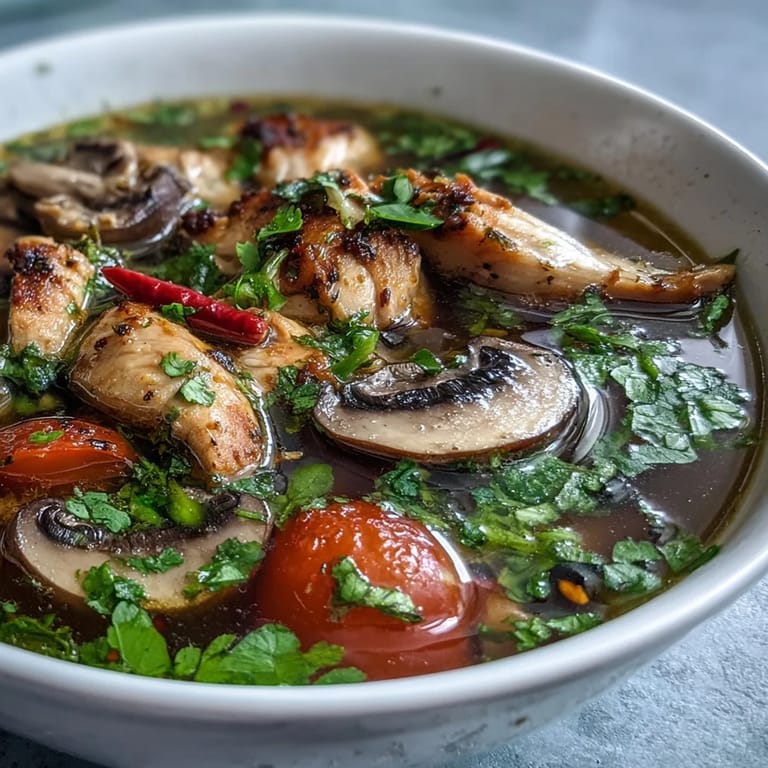
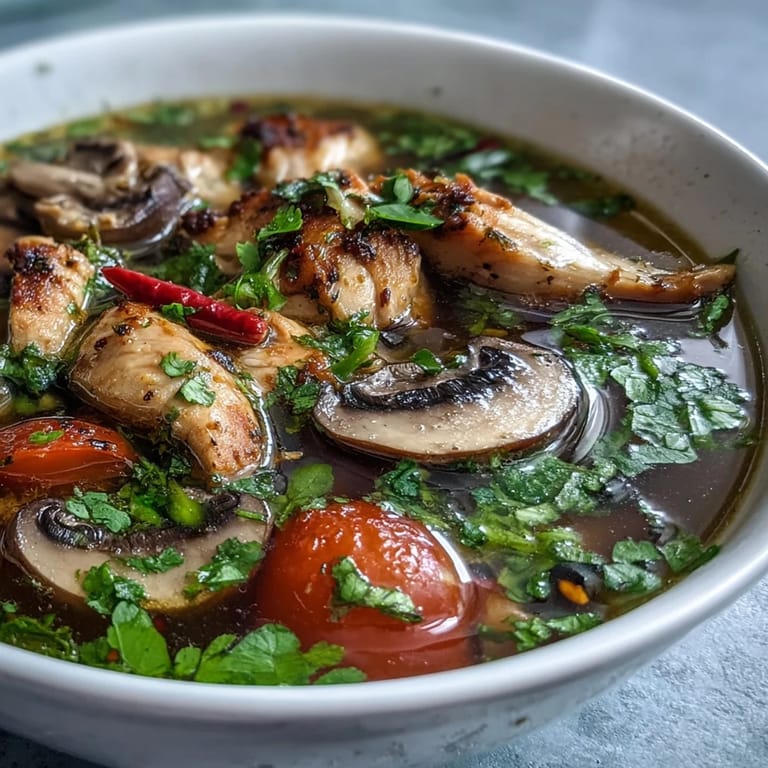
- Mushrooms, tomatoes, and onion: The vegetables add body and sweetness that balance the heat—don't rush adding them or they'll turn to mush.
- Fish sauce: It smells funky straight from the bottle, but this is what brings umami depth and authentic flavor, so trust the process.
- Lime juice and sugar: Fresh lime is non-negotiable here; the sugar isn't about sweetness but about rounding out the sour and salt.
Tired of Takeout? 🥡
Get 10 meals you can make faster than delivery arrives. Seriously.
One email. No spam. Unsubscribe anytime.
Instructions
- Wake up the aromatics:
- Take your lemongrass, galangal, and lime leaves and bruise them against the cutting board or pot with the flat of your knife—you should hear and smell the oils releasing. This single step is what separates a soup that tastes flat from one that fills your whole kitchen with fragrance.
- Build your flavor base:
- Bring the chicken stock to a rolling boil, then add the bruised lemongrass, galangal, lime leaves, crushed chilies, and smashed garlic. Simmer uncovered for five minutes and just breathe in—that's when you know you're on the right track.
- Cook the chicken gently:
- Add your sliced chicken and onion, keeping the heat at a steady simmer so the meat stays tender rather than tough. Skim off any foam that rises to the surface, which only takes a minute but makes the broth clearer and cleaner-tasting.
- Add the vegetables:
- Once the chicken is nearly cooked through, drop in your mushrooms and tomato wedges and let them soften for five to seven minutes. You want them tender but still holding their shape, not dissolving into the broth.
- Season with intention:
- Stir in the fish sauce, lime juice, sugar, and salt, then taste before you finish—this is the moment where you become the chef, adjusting to your own preference. Some days I want more sour, other days the heat needs taming, and that's the whole point.
- Finish and serve:
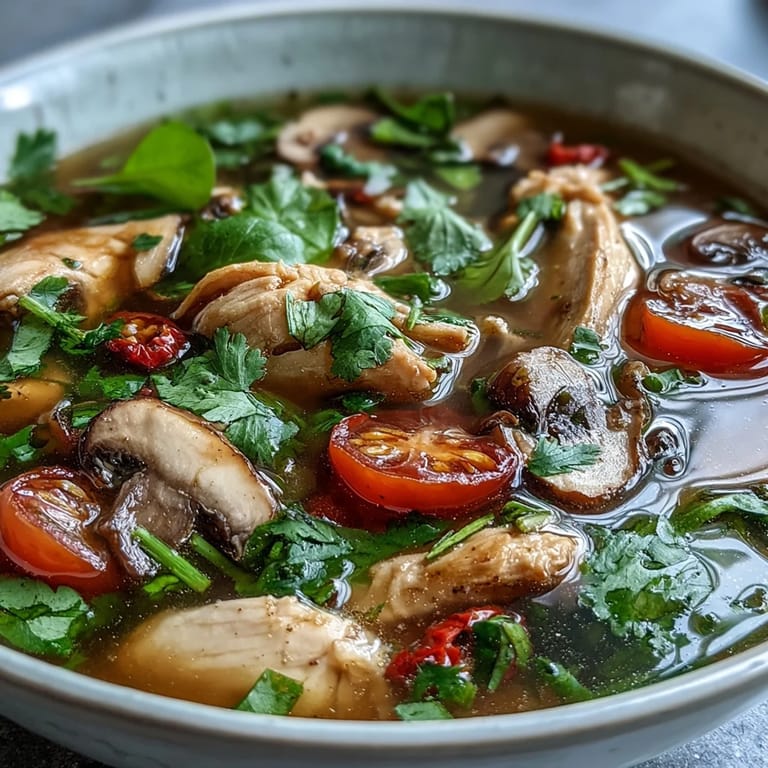
- Remove from heat and fish out the large pieces of lemongrass and galangal if you prefer, though some people leave them in for the look. Ladle into bowls and crown each one with bright cilantro, spring onions, and a lime wedge that guests can squeeze in themselves.
 Pin it
  Pin it
 There's a moment in my kitchen, right around minute fifteen of cooking, when my daughter walks in and stops to inhale deeply—that's when I know the soup's working, that it's doing what it's supposed to do. Tom Yum isn't just dinner; it's an invitation to pause and appreciate how heat, citrus, and herbs can transform a pot of broth into something that feels like care.
The Art of Balance
Tom Yum lives in the tension between four flavors, and getting them to talk to each other is an actual skill worth developing. Sour from the lime, salty from the fish sauce, spicy from the chilies, and aromatic from the lemongrass and galangal should all be present but not one overpowering the others. The tasting spoon becomes your most important tool here—most recipes fail not because the ingredients are wrong but because someone got impatient about adjusting the seasoning at the end.
Working with Unfamiliar Ingredients
The first time you handle lemongrass or galangal, they might feel foreign in your hands, and that's actually fine—rough treatment is what you want here. These ingredients are built to withstand aggressive bruising and long simmers, and they'll reward your confidence with layers of flavor that milder aromatics can't match. Talk to the person at your Asian market; they'll often show you how to trim lemongrass or explain what makes one brand of fish sauce better than another, and that knowledge becomes part of your kitchen memory.
Customizing Your Soup
Once you've made this once and understand how it works, you'll start playing with it, and that's when the real cooking begins. Some nights I add a splash of coconut milk for richness, other times I'll throw in shrimp instead of chicken, and occasionally I'll sneak in some bamboo shoots or bell peppers if that's what I have. The recipe is a framework, not a cage—respect the fundamentals and then trust yourself to bend things.
- Add extra chilies or a drizzle of chili oil if you want heat that lingers rather than just strikes upfront.
- Swap chicken for shrimp or even tofu and adjust your cooking time down by a few minutes.
- A splash of evaporated milk stirred in at the very end creates a creamy version that's surprisingly comforting in colder months.
 Pin it
  Pin it
 This soup has taught me that cooking Thai food at home isn't about perfection—it's about understanding how flavors work together and having the courage to taste and adjust. Once you've made Tom Yum, you'll find yourself making it again and again, each time a little more confident, each time understanding your own kitchen and your own palate a little better.
Questions & Answers
- → Can I use chicken breast instead of thighs?
Yes, boneless skinless chicken breasts work well. However, thighs tend to stay more tender and juicy during simmering. If using breast, be careful not to overcook.
- → What can I substitute for galangal?
Fresh ginger can be used in a pinch, though it will alter the authentic flavor profile. Galangal has a more citrusy, pine-like taste compared to ginger's warmth. Dried galangal is also acceptable.
- → How spicy is this soup?
With 4 birds eye chilies, it has medium-high heat. Adjust the number of chilies to your preference—start with 2 for mild heat or increase to 6+ for extra spicy. The chilies can be removed before serving.
- → Can I make this soup ahead of time?
Yes, the soup can be made up to 2 days ahead and refrigerated. The flavors actually deepen over time. Add fresh lime juice, cilantro, and spring onions just before serving for the best taste.
- → What's the difference between Tom Yum and Tom Kha?
Tom Yum is a clear, spicy-sour soup, while Tom Kha includes coconut milk for a creamy texture. Both use similar aromatics like lemongrass and galangal, but Tom Kha is milder and richer.
- → Where can I find makrut lime leaves?
Makrut lime leaves are available at Asian grocery stores, often in the fresh or frozen section. Dried leaves can also be used but have less intense flavor. Fresh leaves provide the most authentic aroma.