 Pin it
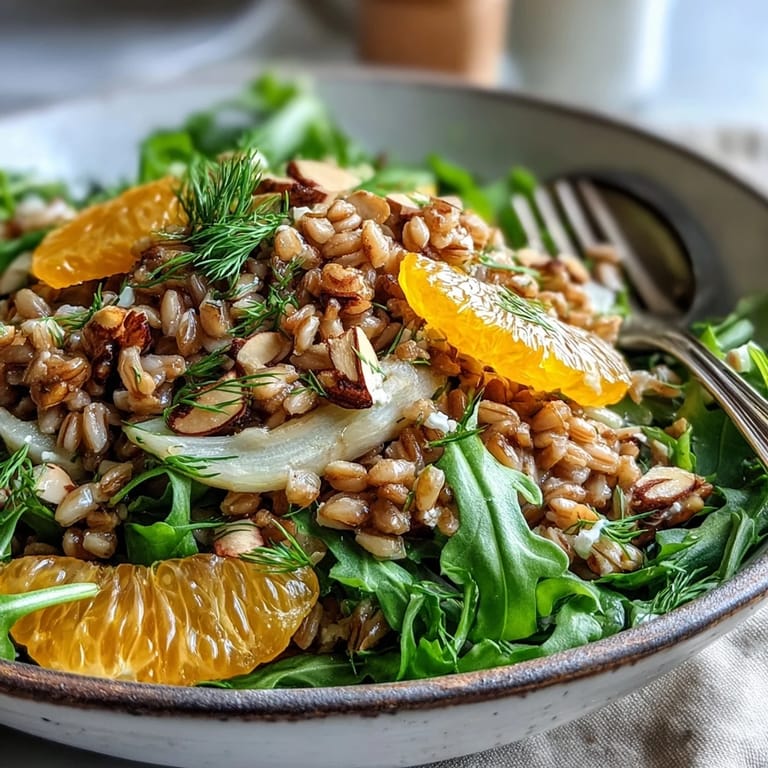
 There's something about the first warm day of spring that makes you crave something bright and alive on your plate. My neighbor handed me a bunch of fresh fennel from her garden last April, and I stood in my kitchen wondering what to do with it besides roast it into submission. That's when I started playing around with farro, citrus, and almonds, and somehow ended up with a salad that tasted like the season itself—crisp, sweet, nutty, and somehow both filling and refreshing at the same time.
I made this for a potluck at work during one of those awkward seasons where everyone brings something heavy and cream-based. When I set down my big bowl of this salad, there was this moment of quiet—like people weren't sure what they were looking at. By the end of lunch, it was almost completely gone, and someone asked for the recipe with such genuine curiosity that I knew I'd stumbled onto something worth making again and again.
Ingredients
- Whole grain farro: This isn't the quick-cooking kind; the real stuff with actual texture and a subtle nuttiness that anchors the entire salad.
- Water and salt: The foundation for tender but still-chewy farro that won't turn into mush.
- Fresh fennel bulb: Slice it thin so it becomes delicate and sweet rather than overpowering; the fronds add color and a gentle anise note.
- Large oranges: Use ones that feel heavy for their size—they'll be juicier and more flavorful than light, dry ones.
- Arugula or baby spinach: This greenery adds freshness and prevents the salad from feeling too dense.
- Fresh parsley: Just enough to brighten everything without turning it into a salad you need to chew around the herbs.
- Sliced almonds, toasted: Toasting them yourself makes an actual difference in flavor; store-bought toasted almonds never taste quite as good.
- Extra-virgin olive oil: Use something you actually like tasting, because you'll taste it clearly here.
- Orange juice and lemon juice: Fresh-squeezed if you can manage it; bottled just won't have the same brightness.
- Honey or maple syrup: A tiny bit of sweetness to balance the acid and tie the dressing together.
- Dijon mustard: An emulsifier that makes the dressing actually stick to the grains rather than pooling at the bottom.
- Sea salt and black pepper: Taste as you season; you might need more than you think.
Tired of Takeout? 🥡
Get 10 meals you can make faster than delivery arrives. Seriously.
One email. No spam. Unsubscribe anytime.
Instructions
- Rinse and cook the farro:
- Run cold water over the farro in a fine-mesh strainer and really rub it between your fingers—this removes excess starch that would make it gluey. Combine it in a saucepan with fresh water and salt, bring to a boil, then lower the heat, cover, and let it simmer gently for 25 to 30 minutes until the grains are tender but still have a slight chew to them.
- Toast the almonds while you wait:
- In a dry skillet over medium heat, stir the sliced almonds constantly for just 2 to 3 minutes until they smell incredible and turn golden—this is the step that makes people say "wait, what's that amazing smell?" Pull them off the heat the moment they're golden because they'll keep cooking from residual heat and you don't want them burnt.
- Drain and cool the farro:
- Once the farro is tender, drain it thoroughly if there's any excess water clinging to it. Spread it on a plate or shallow bowl to cool faster—warm farro will wilt your greens if you're not careful.
- Slice the fennel and prep the oranges:
- Use a sharp knife to cut the fennel bulb in half lengthwise, then slice it as thin as you can manage—a mandoline makes this easier if you have one, but a good knife works fine. Peel your oranges and carefully segment them, working over a small bowl to catch any juice that runs out.
- Make the dressing:
- In a jar or small bowl, combine the olive oil, fresh orange juice, lemon juice, honey, mustard, salt, and pepper, then whisk or shake vigorously until the dressing looks slightly thickened and emulsified. Taste it straight from the whisk and adjust the seasoning—the acid and salt should be noticeable but not aggressive.
- Assemble the salad:
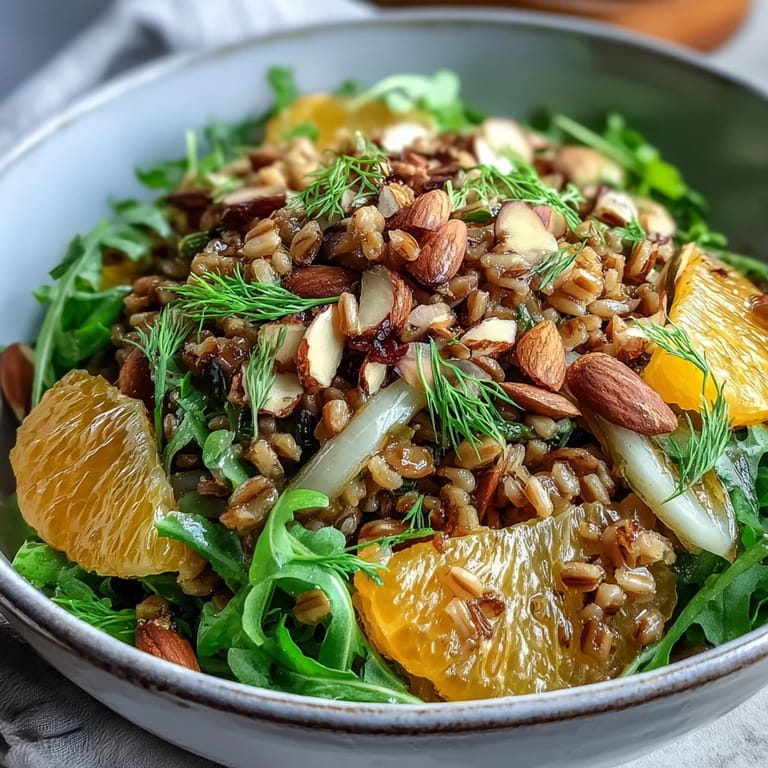
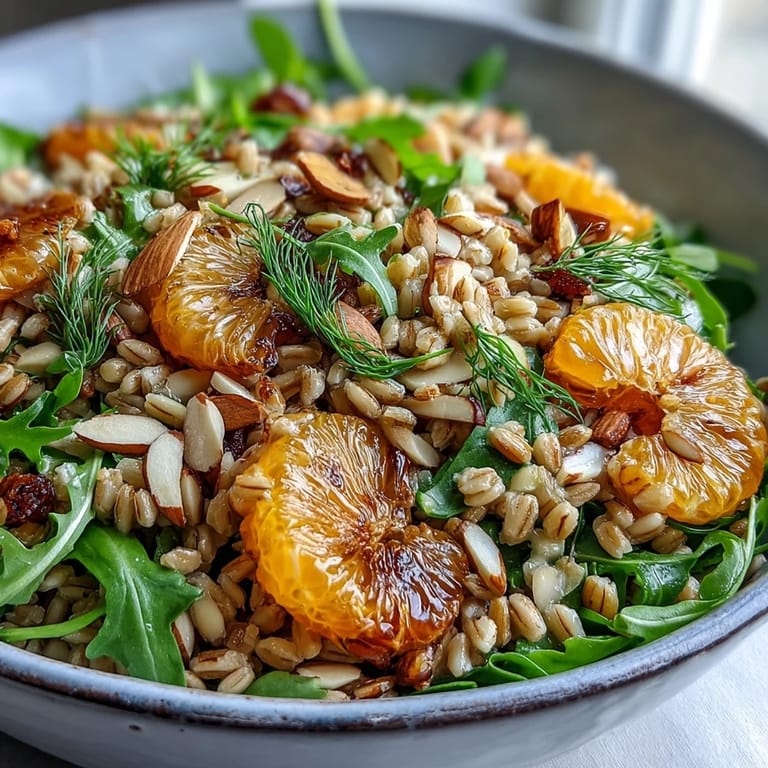
- In a large bowl, combine the cooled farro, sliced fennel, orange segments, fresh greens, and parsley, then pour the dressing over everything and toss gently with your hands or a large spoon until the farro is evenly coated. Scatter the toasted almonds on top and garnish with the reserved fennel fronds, then serve right away or chill it until you're ready to eat.
 Pin it
 My father, who eats the same thing for lunch almost every day, actually asked for a container of this salad to bring to work the following week. He's not a man who gets excited about food, so watching him take that first bite and then immediately take another felt like a real win.
Why This Salad Works Year-Round
In spring and early summer, the citrus is bright and the fennel is at its most delicate, making everything feel light and alive. When fall rolls around, you can swap blood oranges or grapefruit into the mix for deeper flavor, and nobody will notice you've changed a thing because the bones of the salad are so solid. Even in winter when fresh citrus is everywhere, this becomes one of those meals that feels nourishing rather than heavy, which is exactly what you want when the days are short.
How to Make It a Full Meal
On its own, this is a beautiful side dish or light lunch, but if you're feeding actual humans who need protein, you have options. Grilled chicken breast sliced thin sits on top without overwhelming the delicate flavors, and crispy chickpeas tossed with a little paprika and salt add crunch and substance if you're going vegetarian. Even a handful of crumbled feta cheese works beautifully if you want to shift the flavor profile slightly—it picks up on the citrus and fennel in a really lovely way.
Storage, Substitutions, and Serving Suggestions
This salad actually improves with a day in the fridge if you keep the dressing separate and dress it fresh right before serving. You can absolutely use barley instead of farro if you're trying to avoid gluten, and quinoa works too, though it changes the texture and you lose some of that satisfying chew. The dressing is adaptable—use whatever citrus juice you have on hand, and if you don't love Dijon mustard, even a teaspoon of whole grain mustard adds the right emulsifying effect.
- Pair this with a crisp Sauvignon Blanc or a light rosé if you're thinking about wine pairings.
- Make the components separately and store them in the fridge for up to three days, then assemble when you're ready to eat.
- If you're doubling this for a crowd, prep everything the morning of and dress it just before serving so nothing gets soggy.
 Pin it
 This is the kind of salad that makes you feel like you actually know how to cook, even though it's surprisingly forgiving and straightforward. Make it once and you'll find yourself making it a dozen times, each version a little different depending on what's in season and what you've got on hand.
Questions & Answers
- → Can I make this farro salad ahead of time?
Yes, this dish actually improves after chilling for a few hours. The flavors meld together beautifully, and the farro absorbs the citrus vinaigrette. Store in an airtight container for up to 3 days, though add the almonds just before serving to maintain their crunch.
- → What can I substitute for farro?
Barley offers a similar chewy texture, while quinoa provides a lighter, gluten-free alternative. Brown rice or wheat berries also work well. Adjust cooking times accordingly and ensure the grain retains a pleasant chewiness for the best texture contrast.
- → How do I properly slice fennel for this salad?
Trim the fronds and stalks, then cut the bulb in half lengthwise. Remove the tough core, then slice thinly crosswise for delicate ribbons. A mandoline creates perfectly even slices, though a sharp knife works beautifully too. Reserve the frilly fronds for a pretty garnish.
- → Can I use bottled orange juice instead of fresh?
Fresh citrus makes a noticeable difference here, both in flavor and brightness. Bottled juice often lacks the vibrant acidity needed to balance the vinaigrette. If possible, squeeze your own oranges and lemons—the extra step yields significantly better results.
- → What proteins pair well with this salad?
Grilled chicken breast or shrimp complement the Mediterranean flavors beautifully. Chickpeas or white beans add plant-based protein while maintaining the vegetarian profile. Crumbled feta or goat cheese also works wonderfully for added richness and tang.
- → How do I prevent farro from becoming mushy?
Cook farro until tender but still pleasantly chewy, similar to al dente pasta. Drain any excess water immediately and spread on a baking sheet to cool quickly. This halts the cooking process and prevents the grain from becoming waterlogged or gummy.